Author: Roberto Bernardi

  • Composting in a Small British Garden: A No-Nonsense Starter Guide for 2026

    A lot of people assume composting is only worth doing if you have a big plot with room for one of those open-bottomed wooden bays at the bottom of the garden. Not true. Even a paved courtyard, a narrow terraced-house strip, or a first-floor flat with a balcony can support some form of composting. The key is knowing which system fits your space, and not overcomplicating the whole thing from the start.

    This guide is for composting small garden UK beginners who want a straight answer rather than a lecture on carbon ratios. We’ll cover what your council might already offer for free, which compact bins actually work, and what goes in without causing problems.

    Check your council scheme before you spend a penny

    Before buying anything, look up your local council. Many English, Welsh, and Scottish councils still run subsidised or free compost bin schemes, particularly through the Recycle Now network. Councils including South Gloucestershire, Leeds, and several London boroughs have offered bins for as little as £5 to residents in recent years. Some give them away entirely during spring campaigns. It takes two minutes to check, and you could save yourself £40 or more.

    If your council runs a food waste collection service, that handles a chunk of what you’d otherwise compost anyway: cooked scraps, meat, fish, and dairy. Check your area’s collection calendar, because what they accept varies. Some councils collect these materials separately and send them to anaerobic digestion sites, which is actually more efficient than a home bin for those items.

    The best compact composters for small outdoor spaces

    If you’re working with a small garden, patio, or side return, a standard 330-litre open-bottomed bin is probably fine. The Blackwall 330-litre bin is the one sold through most council schemes and it does the job without fuss. It sits directly on soil, worms find their way in, and after a few months you’re pulling finished compost from the hatch at the bottom.

    No soil contact at all? That’s where closed tumbler-style composters come in. The Maze Compost Tumbler and the Whitefurze Compost Tumbler both sit on legs, so they work on concrete or paving. Tumblers heat up faster than static bins, which means quicker results, but they need turning regularly and they don’t hold as much. Good for a household of two; less ideal if you’re generating a lot of kitchen waste.

    For the truly space-pressed, a wormery is worth considering. A three-tray wormery like those sold by Original Organics fits in a space roughly the size of a kitchen bin. It produces two things: worm castings (exceptional compost) and liquid feed you dilute with water. The catch is that worms are sensitive to temperature extremes, so you may need to move it indoors or into a shed during a cold British winter. It also processes food waste more slowly than a hot bin.

    The Hot Bin Composter is worth a mention for anyone who wants speed above all else. It’s insulated and can reach temperatures of around 60°C internally, which means faster breakdown and the ability to compost cooked food, meat, and fish alongside garden waste. It’s more expensive than a standard bin, typically around £160-£180, but it genuinely does what it claims.

    What you can actually compost at home

    There’s a lot of confusion about this, partly because the rules differ slightly between home composting and what councils accept kerbside. Here’s the practical breakdown for a home bin or wormery.

    Definitely in: fruit and vegetable peelings, tea bags (check they’re not plastic-sealed), coffee grounds, eggshells, grass clippings, fallen leaves, cardboard torn into small pieces, newspaper, garden prunings, cut flowers, and plain cooked rice or pasta in small amounts if you have a hot bin.

    Avoid in a standard cold bin: cooked meat, fish, dairy, and bones. These attract rats and foxes, which in a compact urban garden is a real issue. If you want to compost these, the Hot Bin or a bokashi system handles them safely.

    Never compost: cat or dog waste, nappies, glossy paper, coal ash, and any plant material treated with persistent pesticides. Diseased plant material is also best binned rather than composted at home, since a cold bin won’t reliably kill off the spores or pathogens.

    Grass clippings are a common pitfall. They’re brilliant for adding nitrogen, but dumped in a thick layer they turn into a slimy, anaerobic mess. Mix them in thin layers with dry cardboard or scrunched paper to keep air moving through the pile.

    Bokashi: the flat-friendly option

    If you genuinely have no outdoor space, a bokashi system can work entirely indoors. Bokashi uses fermentation rather than decomposition; you layer food scraps with bokashi bran (inoculated with beneficial microorganisms), seal the bucket, and after a couple of weeks you have pre-compost that can be buried in the garden or given to someone with an allotment. It handles meat and dairy, and it doesn’t smell unpleasant if sealed properly. It doesn’t produce finished compost by itself, though. You still need somewhere for the output to go.

    Balancing greens and browns

    You don’t need a chemistry degree for this. Roughly equal volumes of green (nitrogen-rich, moist) and brown (carbon-rich, dry) material keeps things ticking. If the bin smells like ammonia, add more cardboard. If nothing seems to be breaking down, add more grass clippings or vegetable scraps. Moisture matters too; the pile should feel like a wrung-out sponge. In a dry British summer that might mean adding a little water. In a wet autumn it might mean covering the bin.

    For small garden composters, one extra tip: chop or tear everything up before it goes in. Smaller pieces break down much faster. A few minutes with a spade or even scissors on tougher material saves weeks of waiting.

    If you’re already thinking about what else to do with a compact outdoor space, our guide to decking versus patio for British gardens looks at how to make the most of limited square footage underfoot. And if you’re adding a garden structure to house your composting setup, the UK’s updated planning rules for garden outbuildings are worth a read before you commit. Pest control is another consideration once your bin is established; our piece on slug control methods that are actually working in 2026 covers the legal options now that metaldehyde is off the table.

    Composting in a small space isn’t complicated. Pick the right bin for your setup, keep the mix balanced, and you’ll have usable compost within three to six months. That’s free soil conditioner for raised beds, containers, and borders, and one less bag of peat-based compost bought from the garden centre.

    Frequently Asked Questions

    Can I compost if I only have a paved patio and no soil?

    Yes. A tumbler-style composter or Hot Bin sits on legs or a solid base, so it doesn’t need soil contact. A wormery also works on a paved surface and can even be kept in a shed or garage during winter months.

    How long does composting take in a small garden bin?

    A standard cold bin typically takes six to twelve months to produce usable compost. A hot bin or tumbler can produce results in six to twelve weeks if managed actively. Chopping materials into small pieces and balancing greens with browns speeds the process up noticeably.

    Is it legal to compost meat and fish at home in the UK?

    Home composting of meat and fish isn’t illegal, but it’s strongly discouraged in standard open-bottomed bins because it attracts vermin. The Hot Bin and bokashi systems are designed to handle these materials safely without the pest risk.

  • Energy Bills in Britain: What Ofgem’s 2026 Price Cap Changes Actually Mean for Your Household

    Energy Bills in Britain: What Ofgem’s 2026 Price Cap Changes Actually Mean for Your Household

    If you’ve glanced at your energy bill recently and felt a creeping sense of bafflement, you’re not alone. The Ofgem energy price cap 2026 has been all over the news, but most of the coverage buries the actual numbers under layers of jargon. So here’s a straightforward breakdown of what the cap is, how it works, what it currently means for your annual bill, and why some parts of the country are paying noticeably more than others.

    One quick note before we get into it: energy isn’t the only household cost that’s quietly climbing. Plenty of people are also spending more on routine home maintenance tasks. Things like wheelie bin cleaning have become popular as households try to stay on top of hygiene without racking up extra costs. But energy remains the big one. Let’s dig in.

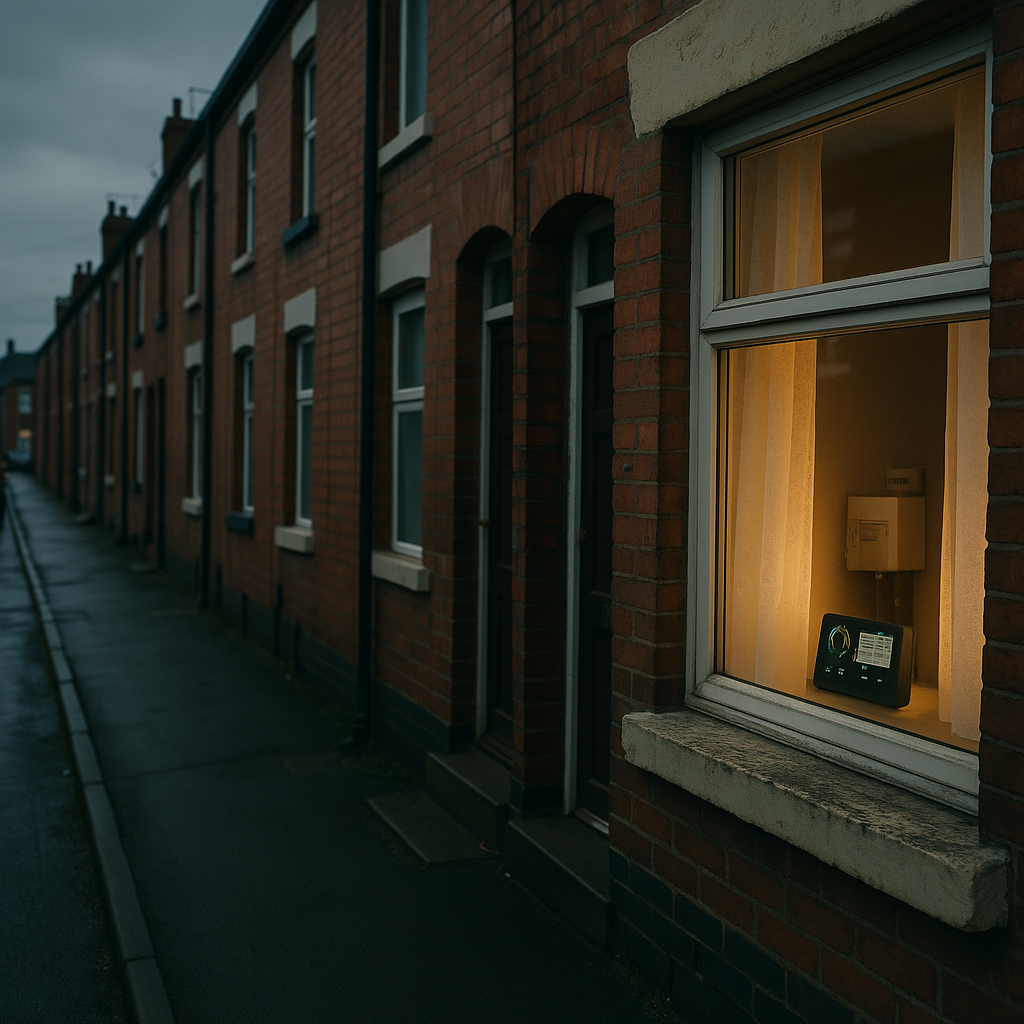
    Terraced houses in northern England representing household energy costs under the Ofgem energy price cap 2026
    Terraced houses in northern England representing household energy costs under the Ofgem energy price cap 2026

    What Is the Ofgem Price Cap and How Does It Actually Work?

    The Ofgem price cap does not cap your total bill. That’s the single most common misunderstanding, and it trips up a huge number of people. What it actually caps is the unit rate you pay per kilowatt hour (kWh) of electricity or gas, plus the daily standing charge. So your final bill still depends on how much energy you use. Use more, pay more.

    Ofgem reviews and resets the cap every quarter. That means January, April, July, and October each bring a potential change. The regulator bases the new figure on wholesale energy market prices, network costs, VAT, and operating costs for suppliers. When wholesale gas prices spike globally, the cap tends to follow upwards. When they ease, there’s usually a lag before consumers see any benefit.

    The figures are expressed as an annual bill for a “typical” household. Ofgem defines that as a property using 2,700 kWh of electricity and 11,500 kWh of gas per year. Most people’s actual usage differs, sometimes significantly, but it gives a consistent yardstick for comparison.

    What Are the Current Cap Figures for 2026?

    For the April to June 2026 quarter, Ofgem set the price cap at £1,849 per year for a typical dual-fuel household on a standard variable tariff. That’s a modest decrease from the £1,938 figure that applied during the first quarter of 2026, reflecting a slight softening in wholesale markets over winter. However, it remains well above pre-crisis norms. Before the energy shock of 2021 and 2022, typical bills sat closer to £1,100 to £1,200 a year.

    Breaking that down further: the capped electricity unit rate for Q2 2026 sits at roughly 24.5p per kWh, with a standing charge of around 61p per day. Gas comes in at approximately 6.4p per kWh, with a daily standing charge of about 31p. Those standing charges alone add up to nearly £340 a year before you’ve used a single unit of energy, which is a figure that catches many people off guard.

    You can check the most up-to-date quarterly figures directly on the Ofgem website, where they also publish the methodology behind each adjustment.

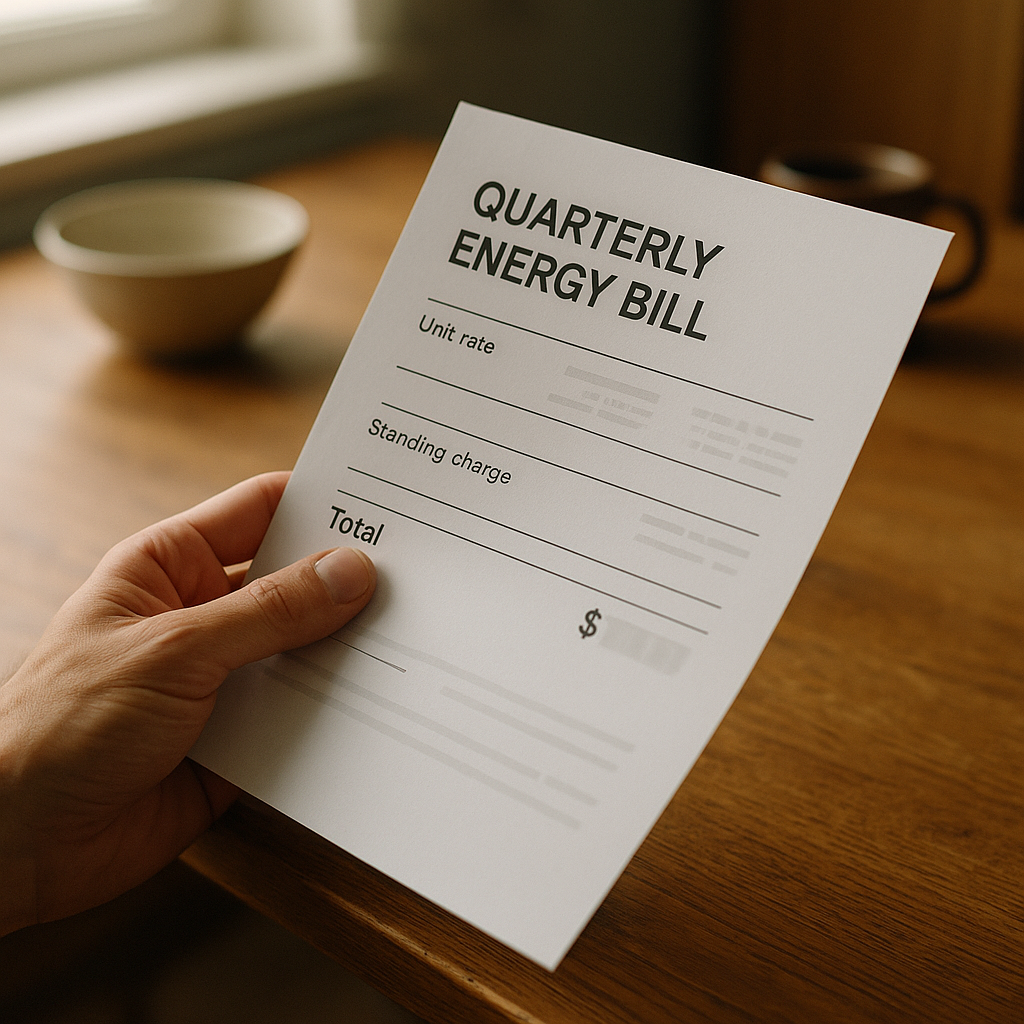
    Household energy bill close-up showing unit rates affected by the Ofgem energy price cap 2026
    Household energy bill close-up showing unit rates affected by the Ofgem energy price cap 2026

    Why Do Bills Vary So Much by Region?

    This is where things get genuinely interesting. The Ofgem energy price cap 2026 is not a single flat number applied identically across Britain. There are fourteen distribution network operator (DNO) regions, and the standing charges in particular differ between them. Network costs vary depending on the age and density of the local grid infrastructure, how far energy needs to travel, and how much investment the local operator has had to make to maintain supply.

    In practice, households in the South West of England and in parts of rural Scotland tend to face higher standing charges than those in London or the East Midlands. The gap can amount to £50 to £100 per year just from the standing charge difference alone, before usage even enters the picture. For households already stretched thin, that regional disparity feels deeply unfair, and it’s prompted ongoing calls for Ofgem to consider a national average standing charge instead of a regionally variable one.

    Northern Ireland operates under a separate regulatory framework and is not covered by Ofgem. The Utility Regulator in Belfast handles price oversight there, and bills have historically tracked slightly differently to the rest of the UK.

    Are Prepayment Meter Customers Still Paying More?

    For most of the post-crisis period, prepayment meter (PPM) customers paid higher rates than those on direct debit. That injustice finally ended in July 2023 when Ofgem mandated parity, and it has held through into 2026. PPM customers now pay the same capped rates as everyone else on a standard variable tariff. That’s a significant improvement for around 7 million households who rely on a key or card meter, many of them in lower-income areas.

    If you’re still unsure which tariff you’re on, your supplier’s app or online account will usually tell you clearly. And if a fixed tariff is available that undercuts the current cap, it’s worth at least running the numbers. Some suppliers have been offering 12-month fixes at rates below the Q2 2026 cap level, which gives a degree of certainty if you expect prices to rise again in the second half of the year.

    Simple Ways to Cut Your Bill Without Losing Comfort

    The price cap is what it is. Ofgem sets it and you can’t negotiate it down. But you can reduce how many units you burn through, which is where the real savings live.

    Draught-proofing doors and windows is one of the highest return-on-investment jobs you can do in a British home, often costing under £50 in materials and saving multiples of that annually. Turning your boiler flow temperature down to around 55 to 60 degrees Celsius (if you have a modern condensing boiler) can cut gas consumption by up to 8%, according to the Energy Saving Trust. A smart meter won’t reduce your bills on its own, but seeing real-time consumption tends to change behaviour. And simple habits like only boiling as much water as you need, showering rather than bathing, and turning radiators off in unused rooms all chip away at that annual figure.

    What Happens Next with the Cap?

    Analysts are cautiously optimistic about the second half of 2026. Wholesale gas prices have eased compared to the peaks of 2022 and 2023, and forecasters at Cornwall Insight have projected the cap could dip slightly further for the July to September quarter, possibly towards the £1,800 mark, though nothing is guaranteed. Global events, from geopolitical tensions to extreme weather affecting LNG supplies, can shift wholesale prices sharply and quickly.

    The longer-term picture involves a gradual shift towards domestic renewable generation, which should eventually reduce Britain’s exposure to volatile global gas markets. But that transition takes years, not months. For now, the Ofgem energy price cap 2026 remains the single most important number for household budgeting across the country, and staying on top of each quarterly change is simply good financial housekeeping.

    Keep an eye on the quarterly announcements, compare fixed tariffs when they appear, and use your smart meter data if you have one. Knowledge, in this case, genuinely does translate to money saved.

    Frequently Asked Questions

    What is the Ofgem energy price cap for 2026?

    For the April to June 2026 quarter, the Ofgem energy price cap is set at £1,849 per year for a typical dual-fuel household using 2,700 kWh of electricity and 11,500 kWh of gas annually. This figure is reviewed every quarter and can go up or down depending on wholesale market prices.

    Does the Ofgem price cap mean I won't pay more than that amount?

    No. The cap limits the unit rates and standing charges your supplier can charge, not your total bill. If you use more energy than the ‘typical’ household Ofgem uses as its benchmark, your bill will be higher than the headline cap figure.

    Why are energy standing charges different in different parts of the UK?

    Standing charges vary by region because they reflect the local distribution network’s costs, including grid maintenance, infrastructure investment, and the distance energy travels to reach homes. Rural areas and regions with older grid infrastructure, such as the South West and parts of Scotland, often face higher daily standing charges.

    Do prepayment meter customers pay more than direct debit customers under the 2026 cap?

    No, since July 2023 Ofgem has required that prepayment meter customers pay the same capped rates as those on direct debit standard variable tariffs. This parity remains in place through 2026, benefiting around 7 million households.

    Is it worth fixing my energy tariff instead of staying on the price cap?

    It depends on the fixed rate being offered and your view on where prices are heading. If a supplier offers a 12-month fix below the current quarterly cap, it can provide useful certainty. Compare deals on Ofgem-accredited comparison sites and check the cap forecast before committing.

  • Decking vs Patio: Which Is Actually Better Value for a British Garden in 2026?

    Decking vs Patio: Which Is Actually Better Value for a British Garden in 2026?

    Every summer, the same debate runs through British gardens: decking or patio? Both transform an outdoor space, both add genuine kerb appeal, and both come with their own set of costs, quirks, and caveats. But with the average UK garden renovation budget getting squeezed tighter each year, the question of which option actually delivers better value matters more than ever in 2026.

    This is a proper cost-by-cost look at timber decking versus stone patio installation, covering what you’ll realistically pay, what the planning rules say, how much upkeep you’re signing yourself up for, and crucially, which one holds up when Britain does what Britain does best: rain.

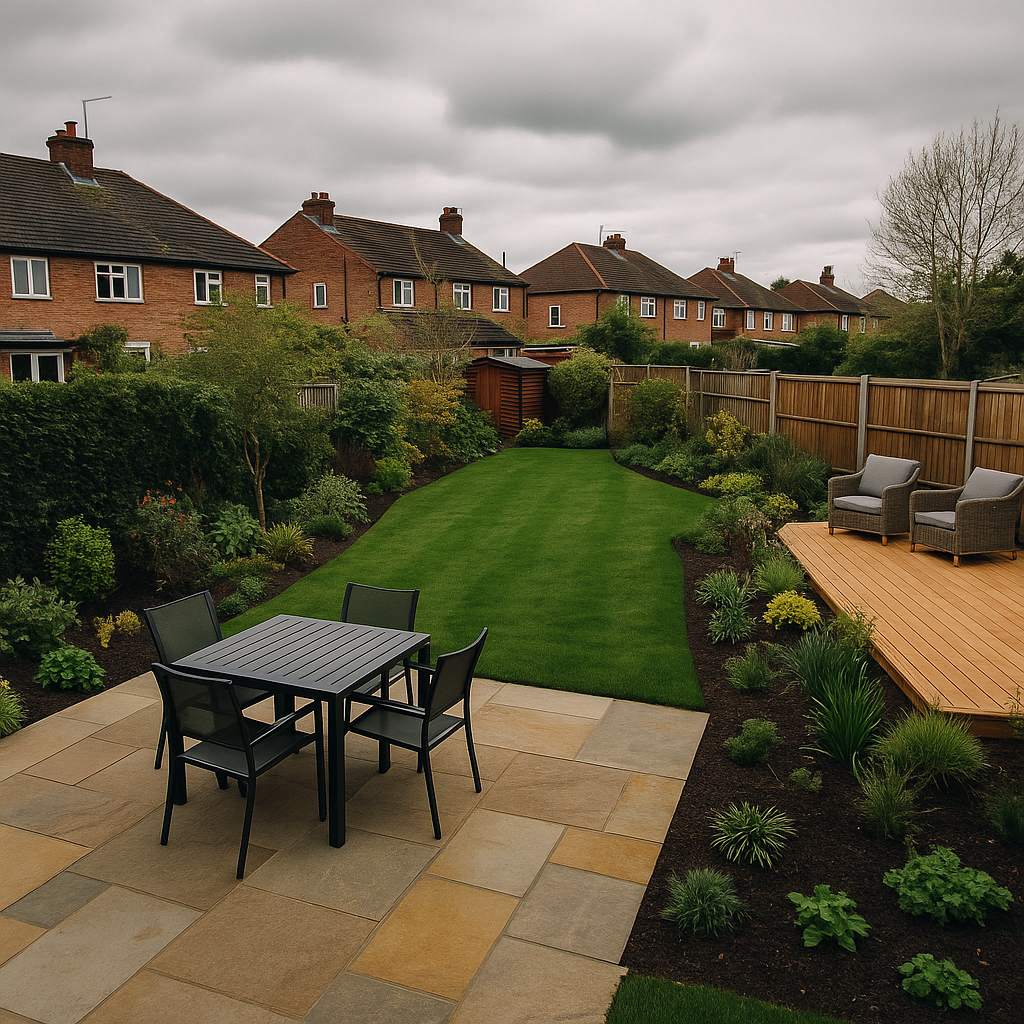
    British garden showing decking vs patio side by side with stone slabs and timber boards
    British garden showing decking vs patio side by side with stone slabs and timber boards

    What Does Timber Decking Actually Cost in 2026?

    Timber decking remains a popular choice, particularly for gardens with uneven ground or sloping plots where laying a level patio would require significant groundwork. For a basic pressure-treated softwood deck covering around 20 square metres, you’re typically looking at £1,500 to £3,000 fitted, including labour. Move up to composite decking (the engineered wood-alternative boards that have taken over in the last five years), and that same 20 square metres jumps to roughly £3,000 to £6,000.

    Hardwood decking sits somewhere in between in terms of longevity but closer to the composite end on price. A skilled local carpenter fitting Ipe or Bangkirai hardwood boards will often quote £4,000 to £7,000 for a mid-size project. Don’t forget to factor in hidden costs: joists, frame materials, concrete footings if needed, and the fixings themselves. These can add 15 to 20 per cent on top of the board quote.

    Stone Patio Installation: What Are the Real Costs?

    A stone patio, when laid properly on a solid sub-base with correctly mixed mortar, can genuinely last decades. The price range is broad because the material choice varies so wildly. Here’s a rough breakdown per square metre installed:

    • Indian sandstone: £70 to £120 per m²
    • Porcelain tiles: £90 to £160 per m²
    • Natural limestone: £100 to £180 per m²
    • Concrete pavers (budget option): £40 to £80 per m²

    For that same 20 square metre space, Indian sandstone would typically land between £1,400 and £2,400 fully installed. Porcelain, which has become enormously fashionable and is arguably the most durable of the lot, pushes up to £1,800 to £3,200. That sub-base matters enormously too: a reputable landscaper will insist on at least 100mm of compacted MOT Type 1 hardcore beneath the mortar bed. Cut corners here and you’ll be re-laying slabs within five years.

    Close-up of stone patio installation showing decking vs patio material quality
    Close-up of stone patio installation showing decking vs patio material quality

    Do You Need Planning Permission for Decking or a Patio in England?

    This catches a surprising number of homeowners out. In England, permitted development rights generally allow you to build a patio at ground level without planning permission, provided it doesn’t raise the ground significantly above the original garden level. Patios are typically fine.

    Decking is slightly more complicated. Under permitted development rules, raised decking (anything more than 300mm above ground level) may require planning permission, particularly in conservation areas, Areas of Outstanding Natural Beauty, or if the deck would cover more than 50 per cent of the garden. Properties that are listed buildings have additional restrictions. Always check with your local planning authority before starting work. The Planning Portal has a straightforward interactive guide to help homeowners in England understand what falls within permitted development.

    For Wales, Scotland, and Northern Ireland, the rules differ slightly, so it’s worth double-checking with the relevant devolved authority.

    Maintenance: Which One Is More Work?

    Softwood decking is honest about what it demands. Without annual cleaning and re-oiling or re-staining, it fades, greys, and eventually rots. Pressure-treated boards extend the life considerably, but you’re still looking at treating the surface every one to two years. Budget roughly £150 to £300 a year for products and your own time, or more if you hire someone. Composite decking is far lower maintenance but not zero: it still needs a good scrub down to prevent algae and moss build-up.

    Stone patios, once properly laid, need relatively little intervention. An annual jet wash and occasional re-pointing of the joints every five to ten years is usually sufficient. Porcelain in particular is highly resistant to staining and frost. The main enemy of a patio in the UK climate is freeze-thaw damage and the moss that creeps into joints, both of which are manageable with basic upkeep. Over a ten-year period, a well-laid stone patio will almost certainly cost less to maintain than equivalent timber decking.

    Which Holds Up Better in Britain’s Wet Climate?

    This is the crux of it, really. The UK averages over 1,200mm of rainfall per year in parts of Wales and the north of England. Even the drier south-east sees enough wet months to make material resilience a serious consideration.

    Timber, by its nature, absorbs moisture. Even treated softwood will swell, contract, and eventually crack with repeated wet-dry cycles. Composite boards handle this better, though cheaper composites can still discolour and warp after prolonged exposure. Hardwood decking, properly maintained, performs reasonably well but requires genuine commitment.

    Stone and porcelain patios, when laid on an adequate sub-base with proper drainage, handle British weather considerably better. Porcelain tiles with a textured surface offer excellent slip resistance, which is a genuine safety consideration during autumn and winter. Indian sandstone can be slippery when wet and may absorb water if not properly sealed, though a quality sealer applied every couple of years largely resolves this.

    On pure climate resilience, stone wins. Decking can still be a brilliant choice, particularly for sloping gardens or elevated entertaining spaces, but you’re buying into a material that needs more attention in a wet climate.

    Which Adds More Value to a Property?

    Estate agents tend to favour patios for long-term value, particularly well-laid natural stone. A quality patio is seen as a permanent improvement that requires little buyer imagination. Decking can divide opinion: some buyers love it, others immediately see it as a future maintenance headache or worry about what’s lurking underneath. Landlords in particular often find that a low-maintenance stone patio is a stronger selling point than timber decking, which tenants may not maintain consistently.

    That said, a beautifully designed composite deck with integrated lighting and built-in seating can absolutely increase a property’s appeal. The material is less important than the quality of the finish and the appropriateness for the garden layout.

    So Which Should You Choose?

    If budget is the primary concern and your garden is relatively flat, Indian sandstone or quality concrete pavers will deliver the most square metres for your money and the lowest long-term costs. If your garden slopes, or you want an elevated outdoor room feel, decking (ideally composite) makes more structural sense and can genuinely transform an otherwise awkward space.

    The honest answer is that neither is universally better. It comes down to your plot, your lifestyle, your maintenance appetite, and how long you plan to stay in the property. What’s certain is that cutting corners on either project, using cheap materials or inexperienced labour, costs more in the long run than doing it properly the first time.

    Frequently Asked Questions

    Is decking or a patio cheaper to install in the UK?

    For a basic 20 square metre project, budget timber decking and Indian sandstone patio installations can cost roughly the same, between £1,400 and £3,000 fitted. However, composite decking and premium stone options push costs higher. Over ten years, stone patios tend to be cheaper once maintenance costs are factored in.

    Do I need planning permission for decking in my garden in England?

    In most cases, ground-level patios don’t require planning permission in England. Raised decking above 300mm may need permission, particularly in conservation areas or if it covers more than half your garden. Always check with your local planning authority or use the Planning Portal before starting work.

    How long does timber decking last compared to a stone patio?

    Pressure-treated softwood decking typically lasts 10 to 15 years with regular maintenance. Composite decking can last 25 years or more. A well-laid natural stone or porcelain patio can last 30 to 50 years, making stone the more durable long-term option in most circumstances.

    Which is safer and less slippery in wet weather, decking or patio?

    Both can be slippery when wet. Textured porcelain tiles offer the best slip resistance and are a popular choice for British gardens. Timber decking can become extremely slippery with algae growth and should be cleaned regularly. Anti-slip strips can help, but are an additional cost and maintenance consideration.

    What is the best patio or decking material for a UK climate?

    Porcelain patio tiles and composite decking boards both perform well in Britain’s wet climate. Porcelain is frost-resistant, low maintenance, and highly durable. Composite decking resists moisture better than timber and won’t rot. Both are worth the higher upfront cost compared to natural timber or cheaper stone alternatives.

  • Learning to Play the Guitar: What You Actually Need to Know Before You Start

    Learning to Play the Guitar: What You Actually Need to Know Before You Start

    Guitars have never been more popular in the UK. Whether it’s the nostalgia of watching old Oasis footage, the explosion of bedroom musicians on social media, or simply the appeal of learning something tactile in an increasingly digital world, more people than ever are picking up a six-string for the first time. According to data from the Music Industries Association, guitar sales in the UK climbed steadily post-pandemic and remain well above pre-2020 levels. It’s a proper boom, and beginners are leading it.

    But starting out can feel overwhelming. Acoustic or electric? Nylon or steel strings? Lessons or YouTube? This guide cuts through the noise and gives you honest, practical advice for getting started.

    A beginner learning to play acoustic guitars in a cosy British living room with afternoon light
    A beginner learning to play acoustic guitars in a cosy British living room with afternoon light

    Choosing the Right Guitar for a Beginner

    The single biggest mistake beginners make is buying the wrong guitar for the music they actually want to play. There’s no universal answer, but there are clear guidelines.

    If you’re drawn to folk, singer-songwriter material, or acoustic pop, start with a steel-string acoustic. Brands like Yamaha, Fender, and Tanglewood offer solid beginner guitars in the £100 to £200 range that are genuinely playable. The Yamaha F310 is a perennial favourite in UK music shops and for good reason. It sounds decent, stays in tune, and won’t punish your budget if you decide guitar isn’t for you after six weeks.

    If rock, blues, or heavier music is your thing, an electric guitar makes far more sense. Steel-string acoustics have higher action (the distance between strings and fretboard) than most electrics, which makes them harder on your fingers initially. An entry-level electric like the Squier Stratocaster paired with a small practice amp will get you playing faster and with less pain. Budget around £200 to £300 for a decent starter pack.

    Classical guitars with nylon strings are softer on the fingers but have wider necks, which some people find awkward. They’re worth considering if you specifically want to learn classical technique or flamenco.

    What to Expect in the First Few Weeks

    Your fingertips will hurt. That’s not a scare tactic, just reality. Steel strings press against soft skin repeatedly, and until calluses develop (usually after three to four weeks of regular practice), it’s uncomfortable. Push through it. The calluses come, the discomfort goes, and suddenly playing for an hour feels effortless.

    Your first goals should be simple: learn to tune your guitar, get comfortable holding it, and master a handful of open chords. G, C, D, Em, and Am will unlock hundreds of songs. Seriously, with just those five chords you can play a substantial portion of the British rock and pop back catalogue.

    Transitions between chords will feel impossibly slow at first. There’s a temptation to wait until the chord is perfect before strumming. Don’t. Keep the rhythm going even if the chord sounds muddy. Muscle memory builds faster when you maintain timing than when you stop and start.

    Close-up of hands forming a chord on guitars showing string and fretboard detail
    Close-up of hands forming a chord on guitars showing string and fretboard detail

    Lessons Versus Self-Teaching: Which Route Works?

    Both work. The honest answer is that it depends on your learning style and your budget.

    In-person lessons with a qualified teacher remain the fastest route to good technique. A teacher spots bad habits early, things like improper wrist angle or thumb placement, that can cause problems or even injury down the line. Expect to pay between £25 and £45 per hour for a private guitar lesson in most UK towns and cities. Some local councils and music hubs offer subsidised lessons, particularly for younger learners, so it’s worth checking what’s available through your local authority.

    Self-teaching via platforms like JustinGuitar (arguably the best free guitar learning resource on the internet, created by British-Australian guitarist Justin Sandercoe) is perfectly viable for motivated beginners. The structured lessons are free, comprehensive, and well-sequenced. Pair that with a tuner app and a chord chart, and you have everything you need to make real progress.

    A hybrid approach works well for many people: a lesson every fortnight to check technique and set goals, with self-directed practice in between. Guitars reward consistent daily practice far more than sporadic marathon sessions. Twenty minutes a day beats two hours once a week, every time.

    Essential Accessories You Actually Need

    Shops and online retailers will try to sell you all manner of guitar accessories. Most of it is optional. Here’s what genuinely matters for a beginner:

    • A tuner. Either a clip-on tuner (around £8 to £15) or a free app like GuitarTuna. Playing an out-of-tune guitar trains your ear incorrectly. Always tune before you play.
    • A capo. Around £10 to £20. Allows you to play in different keys using familiar chord shapes. Useful surprisingly quickly.
    • A spare set of strings. Strings break, often at the worst moment. Have a spare set handy. Ernie Ball or D’Addario are reliable choices available in most UK music shops.
    • A gig bag or case. Protects your instrument. Often included in starter packs.
    • A guitar stand. Cheap (around £10) and genuinely useful. Guitars that are accessible get played more often than ones stored in a case under the bed.

    You can skip the guitar polish, the string winder, the dozen different picks. Keep it simple to start with.

    Keeping Motivated When Progress Feels Slow

    Most people who quit guitars do so in the first two months. The gap between what you can hear in your head and what your hands can actually produce is genuinely frustrating. That gap closes faster than it feels like it will, but only if you keep showing up.

    Set small, concrete goals. Learn one new song per fortnight. Record yourself playing every week (your phone is fine) so you can hear the genuine progress that’s hard to notice in the moment. Play along with recordings of songs you love, even badly. Context and enjoyment matter more than perfection at the beginner stage.

    The BBC Music pages are a decent rabbit hole for discovering artists and styles that might inspire your practice direction. Finding music you’re passionate about playing is probably the most underrated piece of advice for any beginner guitarist.

    Guitars reward patience. The people who succeed aren’t necessarily the most naturally talented; they’re the ones who practised regularly for long enough to get over the hump. The hump is real, but so is what’s on the other side of it.

    Frequently Asked Questions

    How long does it take to learn to play guitar as a beginner?

    Most beginners can play simple songs with a few open chords within four to eight weeks of regular practice. Reaching an intermediate level where you feel genuinely comfortable takes roughly one to two years of consistent daily practice, typically 20 to 30 minutes per day.

    What is the best beginner guitar to buy in the UK?

    The Yamaha F310 is a widely recommended acoustic guitar for beginners in the UK, available for around £120 to £150. For electric, the Squier Affinity Stratocaster starter pack offers good value at around £200 to £250 including an amp. Both are widely available from UK music retailers like Andertons, PMT, and Guitar Guitar.

    Is acoustic or electric guitar easier to learn on?

    Electric guitars typically have lower string action and lighter strings, making them physically easier on the fingers for beginners. Acoustics require no amplifier and are more portable, making practice simpler. The best choice depends on the music style you want to play rather than ease alone.

    How much do guitar lessons cost in the UK?

    Private guitar lessons in the UK typically cost between £25 and £45 per hour depending on the teacher’s experience and your location. London and major cities tend to be at the higher end. Some community music programmes and local councils offer subsidised lessons, particularly for children and young adults.

    Do I need to learn to read music to play guitar?

    No. The vast majority of guitarists, including many professionals, do not read traditional sheet music. Guitar tablature (tabs) is a simpler notation system widely used online and in guitar books that is easy to pick up quickly. Learning basic music theory is helpful over time but is not necessary to get started.