The story of british high street bookshops in 2026 is not the simple obituary many predicted. Yes, WHSmith is pulling down the shutters on its retail division. Yes, footfall across British town centres has been uneven since the pandemic scrambled shopping habits. But walk through Hebden Bridge, Hay-on-Wye, or even a mid-sized market town like Shrewsbury on a Saturday morning, and something unexpected is happening: people are queuing outside independent bookshops. Not metaphorically. Literally queuing.
I’ve been watching this space for a while now, and the picture is genuinely more complicated than either the doom-mongers or the cheerleaders want to admit. There are real casualties, real survivors, and some genuinely odd new shapes that British book retail is taking.
WHSmith’s retail retreat and what it actually means
Let’s start with the most dramatic development. WHSmith confirmed in early 2026 that it would be winding down its high street retail arm, redirecting all focus to its travel-hub business: airport terminals, railway stations, hospitals. The BBC’s business desk has covered the slow erosion of WHSmith’s high street presence for years, but the formal exit still landed with a thud.
WHSmith was never really a bookshop. Walk into any branch in recent years and you’d find stationery, snacks, overpriced water, and a small paperback section that felt like an afterthought. The books were there, but no one was curating them. The point was margin, not love of literature. So in one sense, the closure of those outlets is not the death of book retail. It’s the death of a model that was never particularly good at selling books anyway.
What it does mean, practically, is that dozens of town centres now have large vacant units where WHSmith used to sit. In some places, that’s already being treated as an opportunity. A few local councils are actively recruiting independent retailers, including bookshops, to fill those spaces on subsidised short-term leases. Whether that momentum holds depends almost entirely on local authority budgets, which are under the usual pressure.
Waterstones: steadier than you might think
Waterstones, which has been owned by Elliott Advisors since 2018, has quietly had a decent run. The chain closed some underperforming branches in 2024 and 2025 but held firm in most major city centres and university towns. Its model leans heavily on staff recommendation, local knowledge, and events. The Waterstones in Piccadilly remains one of the most visited bookshops in Europe. That’s not a fluke; it’s the result of treating the physical space as an experience rather than a warehouse.
What Waterstones figured out, arguably before most British retailers did, is that a bookshop has to give you something a screen cannot. Author events, signed editions, a café table where you can sit and read the first chapter before deciding. These things sound small, but they are the difference between a shop that competes with Amazon and one that doesn’t try to.
The indie bookshop comeback that nobody fully planned
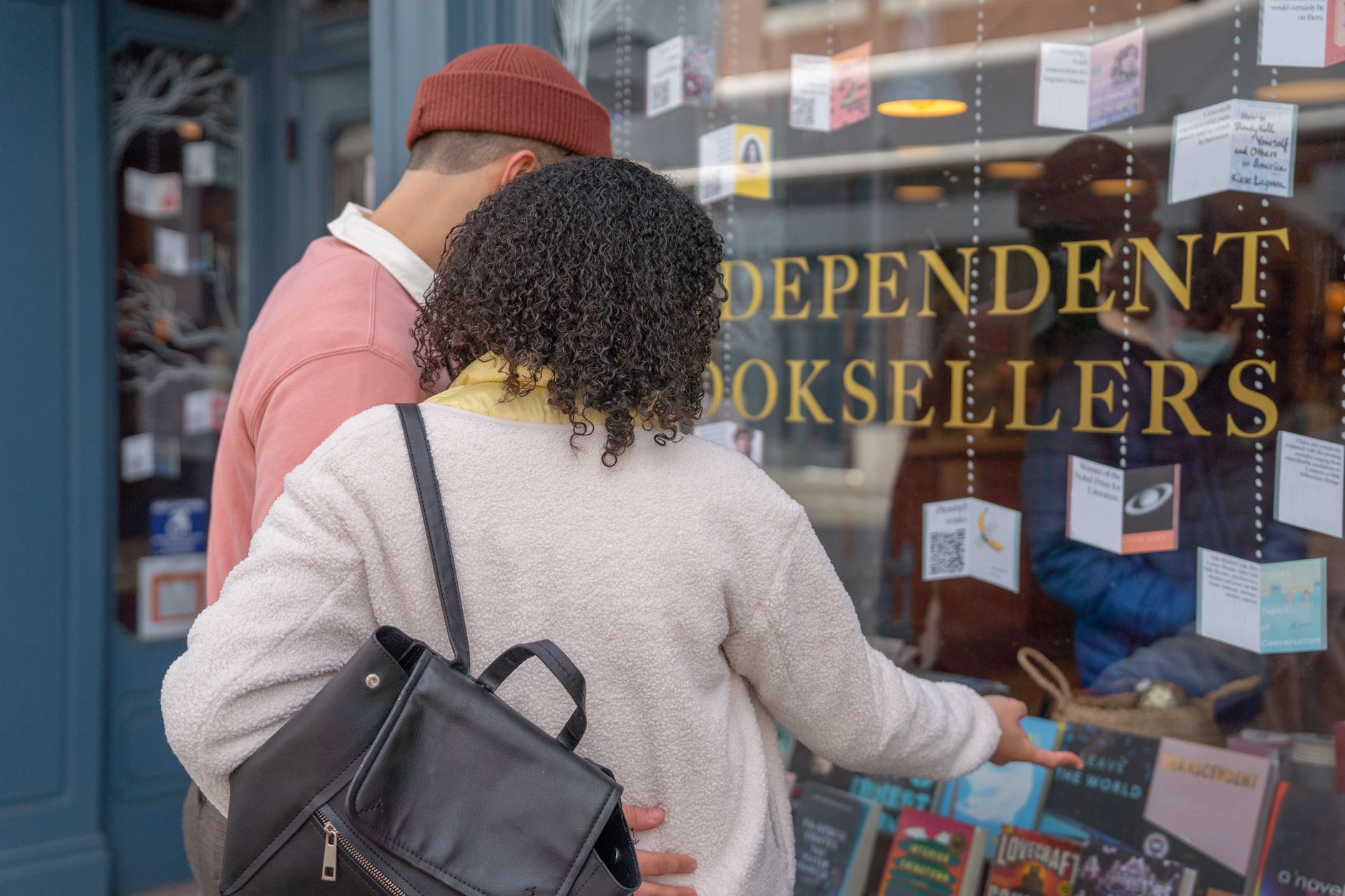
Here is the number that keeps catching people off guard. According to the Booksellers Association, the number of independent bookshops in the UK has grown from around 900 in 2016 to over 1,100 by the mid-2020s. That is a counter-intuitive trend given everything else happening on the high street.
Part of the explanation is rent. Commercial property rates in secondary towns and smaller high streets collapsed hard during 2020-2022, and they haven’t fully recovered. That created an opening for people with a real passion for books and a modest amount of capital to take on affordable leases. Some of these shops are tiny, 400 square feet with a cat asleep in the window, but they’re trading.
The other part is community. I spoke to the owner of an independent shop in a Midlands market town last autumn who told me her Saturday events, a mix of children’s reading groups and local author talks, were regularly pulling 40 to 60 people through the door. That’s 40 to 60 people who walked past every other retail unit to get there. A bookshop that hosts events becomes a community venue, and community venues are surprisingly resilient.
This connects to a broader point about what’s actually reviving some British town centres. It’s not the return of big chains. It’s the clustering of independent, experience-led businesses: a deli, a bookshop, a small brewery taproom, an art gallery. Individually fragile; together, they create a reason to visit. The high street as destination rather than convenience hub is a model that seems to be holding in places where local councils and landlords have been flexible enough to let it develop. You can see a parallel dynamic in how some outdoor and lifestyle businesses have adapted too, something I’ve noticed covering the British cycling boom and the way experience-based retail has followed that wave.
Online, physical, or somewhere in between?
The binary of online versus physical retail has always been slightly false, and nowhere is that clearer than books. Hive.co.uk, which channels online sales through independent bookshops rather than Amazon, has grown steadily. Bookshop.org launched its UK version in 2021 and has distributed millions of pounds to independent shops through its affiliate model. These platforms didn’t kill the physical shops; they became feeders for them.
At the same time, audiobooks and ebooks continue to grow, particularly amongst commuters and people managing busy households. The Publishers Association’s most recent figures show physical book sales in the UK remain strong, particularly in children’s and literary fiction, but the overall market is genuinely multiformat now. A bookshop owner who ignores digital isn’t necessarily doomed, but one who pretends it doesn’t exist is probably in trouble.
What happens to the towns that lose their last bookshop?
Not every story here is optimistic. Plenty of smaller towns have no bookshop at all, and the closure of the local WHSmith branch has left them with nothing. Libraries, already reduced by years of council funding cuts, are often the only place to borrow or browse a physical book. The same pressures battering local print media apply here: when the economics of serving a small community don’t add up, the market exits, and what’s left is a cultural gap.
There’s also a question of what gets stocked. Independent bookshops tend to champion local authors and literary fiction. WHSmith tended to push bestseller lists and promotional titles from major publishers. Neither model is perfect, but the variety between them served different readers. Losing one type of outlet doesn’t just reduce choice; it changes whose books get discovered.
My read of british high street bookshops in 2026 is this: the sector is not dying, but it is sorting itself into two distinct worlds. Towns with engaged communities, affordable property, and a bit of local authority imagination are seeing genuine revival. Towns without those ingredients are seeing shelves go bare. The difference isn’t the internet. It’s whether anyone with power locally has decided that books, and the kind of street life that forms around them, are worth fighting for. Much like planning decisions shaping what gets built in neighbourhoods, the future of the bookshop is, in the end, a local political choice as much as a retail one.
Frequently Asked Questions
Is WHSmith closing all its high street shops in 2026?
WHSmith announced in 2026 that it is winding down its high street retail division to focus exclusively on its travel-hub outlets in airports, railway stations, and hospitals. The full closure timeline for individual branches varies, but the direction is clear: the traditional town centre WHSmith is finished.
Are independent bookshops in the UK growing or declining?
Independent bookshops have actually grown in number since the mid-2010s. The Booksellers Association tracked a rise from around 900 shops in 2016 to over 1,100 by the mid-2020s, driven partly by lower commercial rents in secondary towns and a growing appetite for community-focused retail experiences.
How is Waterstones performing in 2026?
Waterstones has closed some underperforming branches in recent years but remains stable in major city centres and university towns. Its focus on staff-curated recommendations, author events, and signed editions has helped it hold ground against online competition in a way pure volume-led retail could not.
Can I buy from independent bookshops online rather than using Amazon?
Yes. Platforms like Bookshop.org UK and Hive.co.uk allow you to order online while directing revenue to independent bookshops rather than large retailers. Bookshop.org in particular distributes a share of every sale to indie shops through an affiliate model.
Why are some British town centres seeing a bookshop revival?
Lower commercial rents, community demand for experience-led retail, and local authority schemes offering subsidised short-term leases have all contributed. Bookshops that host events, reading groups, and author talks function as community venues, which makes them stickier than a standard retail unit selling only off the shelf.