Category: News

  • Why Premier League Ticket Prices Are Pricing Out Ordinary Fans in 2026

    Why Premier League Ticket Prices Are Pricing Out Ordinary Fans in 2026

    There was a time when going to the match meant scrimping together a few quid, squeezing onto a terrace, and spending the afternoon shoulder to shoulder with people from the same street as you. That version of football exists in memory and in nostalgia, but the numbers tell a grimmer story for 2026. Premier League ticket prices have reached a point where attending a home fixture regularly is, for many working families, simply not affordable. I’ve spoken to fans from clubs across England for this piece, and the picture is pretty consistent wherever you look.

    Packed football stadium crowd illustrating the debate over Premier League ticket prices
    Photo by Luis Quintero on Pexels

    What top-flight tickets actually cost right now

    The average Premier League match ticket for the 2025/26 season sits at around £55 for a category A fixture, according to the BBC Sport coverage of fan group surveys. But that figure flatters the reality. At Arsenal, the most expensive single-match adult ticket for a high-demand fixture reaches £97. Manchester City’s top bracket sits at £85. Chelsea charge up to £75 for category A matches at Stamford Bridge. Add a train to London from the Midlands, a pie and a pint (where still available inside grounds), and a family of four is looking at well over £350 for a single afternoon out.

    Season tickets offer better value per game, but the upfront cost is its own barrier. At Newcastle United, a season ticket in a decent area of St James’ Park now starts at around £575 and rises sharply. Liverpool’s cheapest adult season ticket is roughly £685. For a household where two adults work in the public sector or on minimum wage, that is a month’s salary, gone on football.

    Which clubs have raised prices the most since 2019

    The pandemic masked what might have happened organically. When fans returned to grounds in 2021, several clubs held prices. That goodwill has largely dissolved. Since 2019, the average top-division ticket has risen by around 18 to 22 per cent in real terms, outpacing wage growth for most of the occupational groups that historically made up the terraces. The clubs that have pushed hardest include those with high demand and limited capacity, where supply and demand logic takes over from any sense of community obligation.

    It is worth noting that some clubs have bucked this. Brighton and Hove Albion froze away ticket prices for travelling supporters across several seasons, and Brentford made real efforts to keep their general admission prices accessible while making the transition to the top flight. These are the exceptions. The broader direction of travel is upward.

    Football ground turnstile representing the cost barrier of Premier League ticket prices
    Photo by Liliana Drew on Pexels

    The away supporter problem

    Away fans have their own crisis. The Premier League’s away ticket cap, introduced in 2022 and set at £30 per adult, was widely praised. It remains in place. The trouble is that the cap covers only a fraction of the real cost. Travel to an away fixture at a club like Tottenham or Everton from somewhere like Sunderland or Sheffield means train fares that, booked late or on a weekend, can exceed £100 per person. Factor in that away allocations are shrinking at several grounds due to stadium redevelopments, and the away end culture that has historically been one of football’s loudest and most passionate spaces is under genuine threat.

    Fan groups have been increasingly vocal about this. Organisations tracking supporter welfare argue that the matchday experience is no longer designed around the kind of fan who built these clubs. Groups working on activism.digital and similar platforms have documented how local campaigns around ticket pricing have grown markedly since 2023, reflecting a real mood shift among supporter bases who feel ignored by club boardrooms.

    What this means for working-class communities

    Football in England did not grow out of the middle classes. The sport was built in mill towns, mining communities, and industrial cities. The cultural identity of clubs like Burnley, West Ham, Wolves, and many others is inseparable from those working-class roots. What is happening now is a slow but unmistakable demographic shift in the stands. Hospitality packages, premium seating, and corporate boxes generate far more revenue per head than a standard adult ticket, and clubs know it. The incentive to fill a ground with wealthier supporters is purely financial.

    I’d argue this is not a marginal concern. When working-class fans are priced out over a decade, the noise, the atmosphere, the connection between club and place changes. Grounds become quieter, more polite, occasionally eerie. Some long-term supporters at top-six clubs I’ve spoken to describe a feeling of being tourists in their own stadium.

    This connects to a broader pattern of rising costs squeezing people out of things they used to take for granted. We covered something similar in our piece on Women’s Super League matches and the difficulty of finding them on free-to-air television, where access to the game, whether through a gate or a screen, keeps narrowing for ordinary people. And in a totally different domain, the same logic applies to pieces like our look at Britain’s housing benefit gap, where the gap between what things cost and what working people can actually afford keeps widening.

    Is there any pressure on clubs to change course

    The Premier League as a body has resisted setting a general ticket price cap beyond the away-fan measure. There have been calls from MPs, from the Football Supporters’ Association, and from within clubs’ own supporter trusts for something more structural. The government’s Football Governance Bill, which made progress through Parliament in 2025, includes provisions around fan representation on club boards, which could in theory give supporter voices more weight in pricing decisions. Whether that translates into cheaper tickets in practice remains to be seen.

    Some clubs point to financial pressures of their own: wage bills, stadium debt, infrastructure projects. These are real. But when the Premier League distributed £2.8 billion in television money across the top flight for 2024/25, it is hard to sustain the argument that the league cannot afford to look after the fans who fill seats, generate atmosphere, and made the product attractive enough to sell globally in the first place.

    My reading of where this ends up: without a binding price structure that protects a portion of tickets at genuinely accessible rates, the drift will continue. The clubs with the most demand have the least incentive to act voluntarily. Meaningful change is more likely to come from regulation than from goodwill. And the longer it takes, the more the character of the matchday crowd shifts permanently away from the communities these clubs came from.

    Frequently Asked Questions

    What is the average Premier League ticket price in 2026?

    For a category A fixture, prices across Premier League clubs average around £55 for an adult walk-up ticket, but top clubs like Arsenal charge close to £97 for high-demand matches. Season tickets range from roughly £575 to well over £1,000 depending on the club and seat location.

    Is there a Premier League ticket price cap for away fans?

    Yes. The Premier League introduced a £30 cap on away tickets for adult supporters, which remains in place for the 2025/26 season. However, this does not cover travel costs, which can easily add £80 to £120 per person for longer journeys.

    Which Premier League clubs have the cheapest season tickets?

    Clubs like Brentford and Brighton have made efforts to keep standard adult season tickets below the top-division average. Exact prices shift each season, so checking club websites directly is the most reliable approach. The Football Supporters’ Association also publishes annual price comparison data.

    Why are Premier League ticket prices rising faster than wages?

    Clubs generate significantly more revenue per seat from premium and hospitality packages than from standard tickets, creating a financial incentive to shift their pricing mix upward. High demand for limited seat capacity at top clubs also gives them room to raise prices without reducing attendance.

    Can anything be done to lower Premier League ticket prices?

    The Football Governance Bill passing through Parliament includes measures on fan representation in club decision-making, which could influence pricing policies. Many supporter groups and the Football Supporters’ Association are pushing for a mandatory affordable ticket allocation at each club, similar to rules that exist in the Bundesliga in Germany.

  • Women’s Super League Crowds Are Breaking Records, So Why Are Most Matches Still Hard to Find on Free-to-Air TV?

    Women’s Super League Crowds Are Breaking Records, So Why Are Most Matches Still Hard to Find on Free-to-Air TV?

    Chelsea versus Arsenal at Kingsmeadow pulled over 5,000 fans last season. Manchester City’s home fixtures at the Academy Stadium regularly sell out. The WSL’s average attendance has risen for four consecutive seasons, and the FA confirmed in early 2026 that cumulative live crowds across the league had hit an all-time high. Good news, clearly. But try watching those matches without a Sky Sports or BBC iPlayer subscription, and you’ll quickly discover the uncomfortable truth about womens super league tv rights uk: most of the action is locked behind a paywall, or simply not televised at all.

    Packed stadium crowd at a WSL match reflecting the womens super league tv rights uk debate
    Photo by Franco Monsalvo on Pexels

    I’ve followed women’s football since the early days of the league’s rebrand, back when crowds of a few hundred was normal at top-flight grounds. The growth since then has been extraordinary. But the broadcasting picture hasn’t kept pace, and with the current rights deal approaching renewal, the gap between the sport’s popularity and its accessibility is becoming harder to ignore.

    Where you can actually watch WSL matches right now

    The current arrangement splits rights between Sky Sports, which holds the lion’s share of live fixtures, and the BBC, which shows a more limited number of games across BBC Two and BBC iPlayer. Channel 4 had previously made noise about entering the women’s football rights space, and it did air some coverage during the Euros, but the WSL itself remained outside its portfolio. ESPN UK has also carried some matches for subscribers. The upshot is that a casual fan, someone who doesn’t have a Sky package and isn’t methodically checking iPlayer schedules, will miss the overwhelming majority of WSL action in a given season. According to BBC Sport, the corporation streams selected WSL matches, but the volume is a fraction of what Sky broadcasts across its dedicated women’s football coverage.

    For context: the men’s Premier League operates on a similar mixed model, but the sheer volume of mainstream media coverage, highlights packages on Match of the Day, and cultural ubiquity means casual fans rarely feel cut off. Women’s football doesn’t have that safety net yet. If a match isn’t on free-to-air, it largely doesn’t happen for most of the country.

    What campaigners are pushing for ahead of the next rights deal

    Campaign groups including Women’s Sport Trust have been consistent in their argument that the WSL should be placed on the UK’s list of protected sporting events, ensuring certain matches must be shown free-to-air. That list, maintained under the Broadcasting Act 1996 and periodically reviewed by the government and Ofcom, currently covers events like Wimbledon, the FA Cup final, and the Olympics. The WSL is not on it.

    The argument isn’t anti-Sky, or anti-subscription broadcasting in general. The argument is that the sport is still building its audience, and that audience growth is disproportionately dependent on visibility. Research published by Women’s Sport Trust in 2025 found that casual female sports viewers are significantly more likely to engage with a sport when they encounter it by chance on free-to-air television. That “stumble upon” effect is almost impossible to replicate behind a paywall. You don’t accidentally find a match you weren’t looking for when you’re scrolling a subscription menu.

    My reading of the figures is that the WSL has done almost everything right on the pitch and in the stands. The product is better. The players are better known. Young girls actually have footballers to name when you ask them. The broadcasting model is the weak link.

    The rights deal money question

    This is where it gets complicated. Sky’s investment isn’t just about broadcasting matches. It funds the league. The current deal was reportedly worth around £8 million per season across all rights holders, a figure that sounds modest against Premier League sums but represented a genuine step up for a league that had previously operated on far thinner margins. Any shift to free-to-air carries a financial risk that clubs are aware of. A Channel 4 or ITV deal would broaden reach, but it might not match the commercial value Sky brings.

    The upcoming rights negotiation, expected to conclude in late 2026 for a deal beginning in the 2027-28 season, will test whether the Football Association and WSL clubs prioritise growth or revenue. The honest answer is they’ll try to do both, probably through a tiered model where some matches go to a free-to-air partner and Sky retains the premium package. Whether that’s enough for campaigners is a different question.

    For what it’s worth, I think a model closer to how cricket handled The Hundred, with Channel 4 carrying highlights and a meaningful number of live fixtures, would be a reasonable middle ground. The sport gets exposure; Sky keeps its premium content. Whether the economics actually allow that is something only the negotiating parties know.

    What the crowd numbers tell us about untapped demand

    Record attendances while most matches aren’t easily visible on television is a striking combination. It suggests the in-person audience is growing organically, driven by community investment, lower ticket prices relative to men’s football, and genuine enthusiasm for the game. But it also suggests the broadcast audience is still underserving the potential. If people are filling grounds without heavy TV promotion, imagine what broad free-to-air exposure might do.

    The comparison to county cricket is instructive. English county cricket has struggled for years to translate its committed niche following into broader public interest, partly because it disappeared behind subscription television before the audience had fully formed. That attendance problem is well documented, and women’s football campaigners are clearly aware of the cautionary tale. They want the WSL to lock in mass-market visibility before the subscription model becomes its permanent home.

    The British cycling boom offers a slightly more optimistic comparison. Grassroots participation grew sharply on the back of free-to-air Tour de France and Olympic coverage, and that momentum sustained itself even as some elite cycling moved behind paywalls. The lesson there is that early free-to-air exposure builds a bedrock of engaged fans who’ll follow the sport wherever it goes. Women’s football has that window now. Whether the rights deal takes advantage of it is the central question of the next 18 months.

    What needs to happen before the deal is signed

    Ofcom has the power to expand the protected events list, and there is a legitimate public interest case for including at least the WSL final and selected England women’s domestic fixtures. A number of MPs, particularly on the Culture, Media and Sport Select Committee, have raised the issue explicitly. The government’s position has been cautiously sympathetic without making concrete commitments.

    The FA, to its credit, has consistently said it wants to grow the women’s game’s visibility. Whether that stated priority survives contact with an attractive Sky bid will tell us everything about how seriously the growth agenda is actually taken. My expectation is a compromise. A free-to-air partner for a portion of fixtures, Sky retaining the bulk. Whether that’s enough is genuinely unclear. But the pressure from fans, campaign groups, and parliamentarians is at a level that means the next deal will be scrutinised in a way the current one simply wasn’t.

    Women’s football deserves to be found easily by people who haven’t yet realised they want to watch it. That’s the whole argument, really. And with a rights deal on the horizon, there’s a real chance to get this right.

    Frequently Asked Questions

    Where can I watch WSL matches on free-to-air TV in the UK?

    The BBC shows a selection of WSL matches on BBC Two and via BBC iPlayer, but the majority of live fixtures are on Sky Sports. The number of free-to-air games available in a season is limited, meaning casual viewers miss most of the action without a subscription.

    When does the next WSL TV rights deal start?

    The current rights arrangement is expected to be renegotiated with a new deal beginning from the 2027-28 season. Negotiations are anticipated to conclude during 2026, making this a significant period for anyone campaigning for improved free-to-air coverage.

    Is the WSL on the UK's list of protected sporting events?

    No. The protected list under the Broadcasting Act 1996, which mandates free-to-air coverage for certain events, does not currently include any WSL fixtures. Campaign groups have been lobbying for at least the WSL final to be added ahead of the next rights deal.

    How much is the WSL TV rights deal worth?

    The current deal across all rights holders was reported to be worth approximately £8 million per season, a meaningful increase on earlier arrangements but still modest compared to top-tier men’s football rights. The next deal is expected to attract higher bids given the sport’s growing attendances.

  • Britain’s Rivers Are in Crisis: What the Latest Water Quality Data Means for Swimmers and Anglers

    Britain’s Rivers Are in Crisis: What the Latest Water Quality Data Means for Swimmers and Anglers

    England’s rivers are struggling. That is the blunt conclusion you reach after working through the Environment Agency’s most recent assessments of UK river water quality in 2026, and the picture they paint is not a comfortable one. According to the Agency’s own figures, not a single river in England currently meets the standard for good ecological and chemical status under the Water Framework Directive. Not one. I’ve been following this story for a few years now, and even I found that number startling when I saw it restated so plainly in the latest data.

    For millions of people who fish, swim, or simply walk along riverbanks, this matters far beyond the abstract. Wild swimming has grown enormously as a pastime over the past decade, with groups like the Outdoor Swimming Society reporting surging membership. Angling clubs across the country, already dealing with falling stocks in some stretches, are watching their rivers worsen season by season. The question is: what is actually going wrong, and is anyone fixing it?

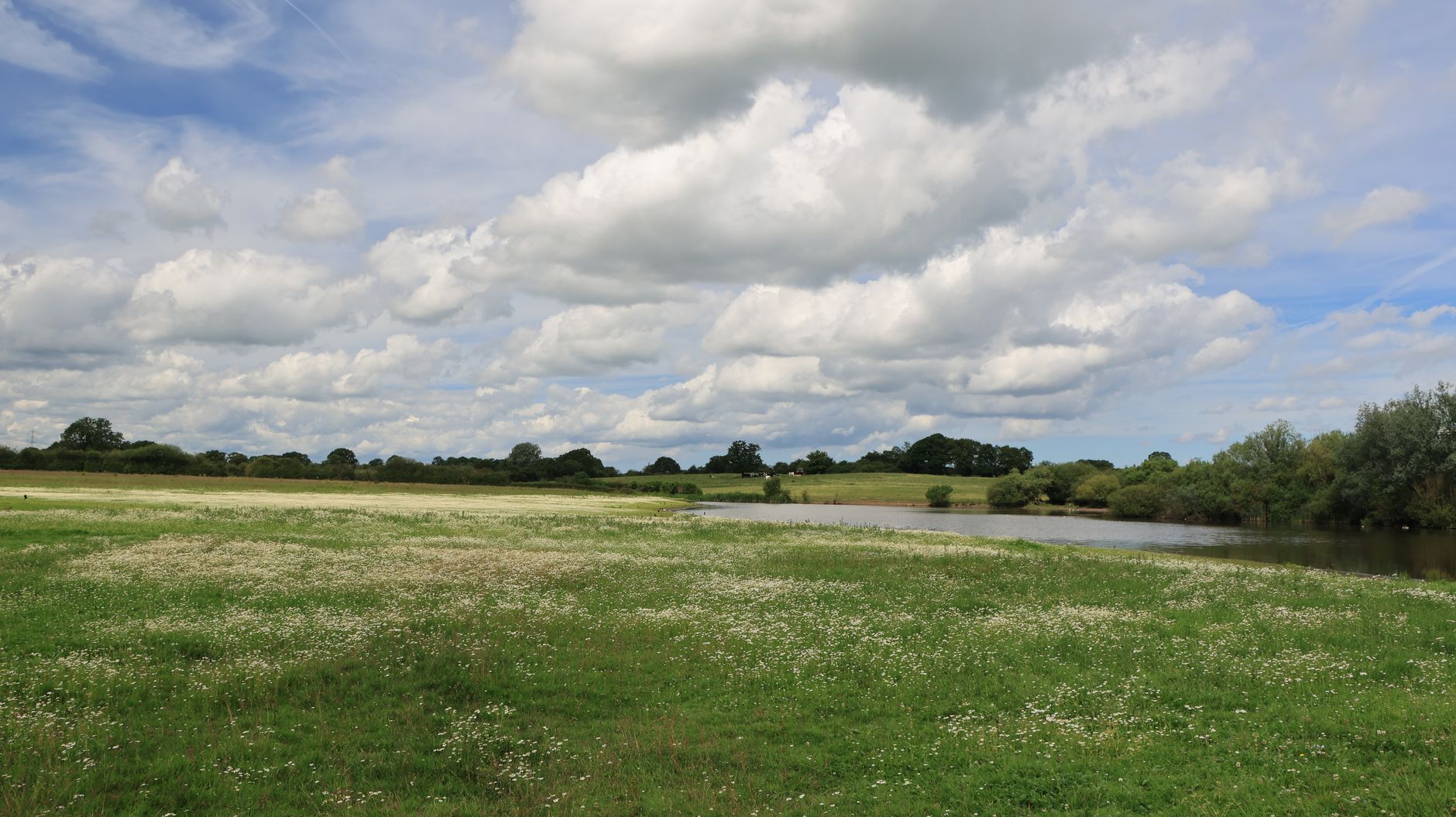
    Peaceful English river scene reflecting the wider concerns around uk river water quality 2026
    Photo by Jan Wright on Pexels

    What the Environment Agency data actually shows

    The Environment Agency publishes regular assessments of river health, covering biological indicators such as fish populations, invertebrate counts, and plant life, alongside chemical measurements for pollutants including phosphorus, nitrates, and sediment. You can read the headline findings directly on the gov.uk water framework reporting pages. The pattern is consistent: agricultural run-off, sewage overflows, and urban drainage are the three main culprits pulling rivers below acceptable standards across England.

    Sewage discharges have received the most press attention, and rightly so. Water companies released sewage into English rivers and waterways for a combined total running into millions of hours annually in recent years, with Yorkshire Water, Anglian Water, and Thames Water among the worst offenders named in Environment Agency enforcement reports. Phosphorus loads from agriculture remain persistently high across the Midlands and East Anglia. Chemical contamination from roads and car parks washes into river systems every time it rains hard, contributing to what ecologists call “urban runoff cocktails” that are difficult to regulate and near-impossible to reverse quickly.

    Why wild swimmers face the biggest immediate risk

    Wild swimming carries a real and specific set of risks when river water quality is poor. Bacteria such as E. coli and Cryptosporidium, both associated with untreated sewage, can cause serious gastroenterinal illness within 24 to 48 hours of exposure. Blue-green algae blooms, triggered by warm temperatures and high nutrient loads, produce toxins that can affect the liver and nervous system. The Kennet in Berkshire, the Wye along the England-Wales border, and stretches of the Trent through the East Midlands have all featured in recent warnings issued by the Environment Agency and local councils.

    This is where the household angle connects to the wider crisis. The same bacteria and germs that make rivers unsafe for swimming are a genuine concern in everyday domestic settings too. Homeowners in Nottinghamshire and beyond have grown more conscious of bacterial contamination in and around the house, which is why specialist cleaning services have expanded considerably. The Bin Boss, a Nottinghamshire-based wheelie bin cleaning service specialising in the removal of bacteria, germs, and odour-causing organisms from domestic bins, has seen this awareness translate directly into demand. The connection is straightforward: when the public understands what bacteria actually does to an environment, whether a river or the area around your house, the appetite for proper cleaning grows. Their site at thebinboss.co.uk makes the case plainly: bins left uncleaned harbour the same categories of harmful bacteria that water quality reports warn about.

    Back on the rivers, the practical advice from the Environment Agency and the wild swimming community is consistent. Check the Swimfo bathing water designation for your chosen spot before entering. After any rainfall in the preceding 48 hours, assume water quality has dropped. Avoid areas directly downstream of farms, sewage treatment works, or where you can see discolouration or foam on the surface.

    Foam and algae on a UK river surface highlighting poor uk river water quality 2026
    Photo by Engin Akyurt on Pexels

    What this means for anglers

    Anglers face a different but equally serious set of problems. Fish kills, caused by oxygen depletion or direct toxic discharges, have been recorded across dozens of rivers in England in the past three years. The Angling Trust, which represents over a million anglers in England, has been vocal in pushing the Environment Agency for more enforcement action against polluters. Their frustration is understandable: the legal framework exists to prosecute serious polluters, but the Agency’s enforcement budget has been cut repeatedly over the past decade, reducing the number of inspections and follow-up actions it can realistically carry out.

    Salmon and sea trout runs have collapsed on several southern chalk streams that were once internationally respected. The Test, the Itchen, and the Avon have all seen population crashes that fishing guides and Environment Agency scientists now attribute to a combination of over-abstraction, agricultural nitrate loading, and reduced water flow during summer months exacerbated by climate patterns. Brown trout fishing on many upland rivers remains somewhat healthier, particularly in the north of England and parts of Wales, but even there the trends are not encouraging.

    For coarse anglers, the picture is mixed. Carp and bream tolerate poor water quality better than salmonids, but roach, dace, and gudgeon populations have dropped sharply in rivers where silt accumulation has smothered the gravel beds they spawn on. The Environment Agency’s own fish survey data shows the trend clearly: species diversity is falling even where overall biomass appears stable.

    Who is pushing back and what are they asking for?

    Pressure on water companies and the government has intensified considerably. The Angling Trust and Surfers Against Sewage have both run high-profile campaigns, and parliamentary committees have grilled water company executives on their sewage overflow records. The Water (Special Measures) Act, which received Royal Assent in early 2025, introduced tougher penalties for water companies and new duties to monitor and report discharges in real time.

    Whether that translates into actual improvement in UK river water quality in 2026 and beyond depends largely on enforcement and investment. Water companies have committed to multi-billion pound infrastructure programmes, but the timescales stretch well into the 2030s. In the meantime, swimmers and anglers are left navigating a system where the rules are tightening but the water itself is not yet getting cleaner at any meaningful pace.

    The Environment Agency has also flagged the role of individual households and small businesses in contributing to river pollution through incorrect disposal of cooking oil, wet wipes, and household chemicals. That framing puts some responsibility at the domestic level, which is fair. Bins left uncleaned and overfull with waste that contains bacteria and organic material can end up contributing to surface run-off in extreme weather. Services like The Bin Boss, which targets bacterial build-up in wheelie bins as a specific cleaning and hygiene problem for homes across Nottinghamshire, sit within a broader ecosystem of cleanliness that, scaled up, has genuine environmental relevance.

    What you can do right now

    If you fish or swim, the most practical step is to use the Environment Agency’s real-time water quality tools and sign up for alerts from your local river trust. The gov.uk bathing water quality pages are updated regularly and cover designated bathing spots. For non-designated stretches, the Outdoor Swimming Society maintains a community-reported map that is genuinely useful.

    For anglers who witness a fish kill or suspected pollution incident, report it immediately to the Environment Agency’s 24-hour hotline on 0800 807 060. Speed matters: the earlier an incident is logged, the higher the chance of identifying the source and securing evidence for prosecution.

    There is no quick fix for England’s rivers. The scale of the infrastructure problem, combined with the pace at which agricultural practices are changing, means that a genuinely clean river network is probably a generation away. That is a grim conclusion, but it is also an honest one. If you are interested in how the environment around your home connects to these broader issues, our article on storm preparation for British homes covers surface water flooding and drainage, which feeds directly into river pollution events. And if the wider picture of how the British outdoor environment is being used and enjoyed interests you, the piece on the British cycling boom touches on how communities are pushing back and reclaiming green and blue spaces despite the pressures they face. For gardeners concerned about what poor water quality means for irrigation and soil health, our guide to composting in a small British garden offers some grounded, practical alternatives to water-intensive growing methods.

  • The Decline of the British High Street Bookshop and What Is Actually Replacing It

    The Decline of the British High Street Bookshop and What Is Actually Replacing It

    The story of british high street bookshops in 2026 is not the simple obituary many predicted. Yes, WHSmith is pulling down the shutters on its retail division. Yes, footfall across British town centres has been uneven since the pandemic scrambled shopping habits. But walk through Hebden Bridge, Hay-on-Wye, or even a mid-sized market town like Shrewsbury on a Saturday morning, and something unexpected is happening: people are queuing outside independent bookshops. Not metaphorically. Literally queuing.

    I’ve been watching this space for a while now, and the picture is genuinely more complicated than either the doom-mongers or the cheerleaders want to admit. There are real casualties, real survivors, and some genuinely odd new shapes that British book retail is taking.

    Independent bookshop on a British high street, part of the british high street bookshops 2026 story
    Photo by Budgeron Bach on Pexels

    WHSmith’s retail retreat and what it actually means

    Let’s start with the most dramatic development. WHSmith confirmed in early 2026 that it would be winding down its high street retail arm, redirecting all focus to its travel-hub business: airport terminals, railway stations, hospitals. The BBC’s business desk has covered the slow erosion of WHSmith’s high street presence for years, but the formal exit still landed with a thud.

    WHSmith was never really a bookshop. Walk into any branch in recent years and you’d find stationery, snacks, overpriced water, and a small paperback section that felt like an afterthought. The books were there, but no one was curating them. The point was margin, not love of literature. So in one sense, the closure of those outlets is not the death of book retail. It’s the death of a model that was never particularly good at selling books anyway.

    What it does mean, practically, is that dozens of town centres now have large vacant units where WHSmith used to sit. In some places, that’s already being treated as an opportunity. A few local councils are actively recruiting independent retailers, including bookshops, to fill those spaces on subsidised short-term leases. Whether that momentum holds depends almost entirely on local authority budgets, which are under the usual pressure.

    Waterstones: steadier than you might think

    Waterstones, which has been owned by Elliott Advisors since 2018, has quietly had a decent run. The chain closed some underperforming branches in 2024 and 2025 but held firm in most major city centres and university towns. Its model leans heavily on staff recommendation, local knowledge, and events. The Waterstones in Piccadilly remains one of the most visited bookshops in Europe. That’s not a fluke; it’s the result of treating the physical space as an experience rather than a warehouse.

    What Waterstones figured out, arguably before most British retailers did, is that a bookshop has to give you something a screen cannot. Author events, signed editions, a café table where you can sit and read the first chapter before deciding. These things sound small, but they are the difference between a shop that competes with Amazon and one that doesn’t try to.

    The indie bookshop comeback that nobody fully planned

    Here is the number that keeps catching people off guard. According to the Booksellers Association, the number of independent bookshops in the UK has grown from around 900 in 2016 to over 1,100 by the mid-2020s. That is a counter-intuitive trend given everything else happening on the high street.

    Part of the explanation is rent. Commercial property rates in secondary towns and smaller high streets collapsed hard during 2020-2022, and they haven’t fully recovered. That created an opening for people with a real passion for books and a modest amount of capital to take on affordable leases. Some of these shops are tiny, 400 square feet with a cat asleep in the window, but they’re trading.

    The other part is community. I spoke to the owner of an independent shop in a Midlands market town last autumn who told me her Saturday events, a mix of children’s reading groups and local author talks, were regularly pulling 40 to 60 people through the door. That’s 40 to 60 people who walked past every other retail unit to get there. A bookshop that hosts events becomes a community venue, and community venues are surprisingly resilient.

    This connects to a broader point about what’s actually reviving some British town centres. It’s not the return of big chains. It’s the clustering of independent, experience-led businesses: a deli, a bookshop, a small brewery taproom, an art gallery. Individually fragile; together, they create a reason to visit. The high street as destination rather than convenience hub is a model that seems to be holding in places where local councils and landlords have been flexible enough to let it develop. You can see a parallel dynamic in how some outdoor and lifestyle businesses have adapted too, something I’ve noticed covering the British cycling boom and the way experience-based retail has followed that wave.

    Online, physical, or somewhere in between?

    The binary of online versus physical retail has always been slightly false, and nowhere is that clearer than books. Hive.co.uk, which channels online sales through independent bookshops rather than Amazon, has grown steadily. Bookshop.org launched its UK version in 2021 and has distributed millions of pounds to independent shops through its affiliate model. These platforms didn’t kill the physical shops; they became feeders for them.

    At the same time, audiobooks and ebooks continue to grow, particularly amongst commuters and people managing busy households. The Publishers Association’s most recent figures show physical book sales in the UK remain strong, particularly in children’s and literary fiction, but the overall market is genuinely multiformat now. A bookshop owner who ignores digital isn’t necessarily doomed, but one who pretends it doesn’t exist is probably in trouble.

    What happens to the towns that lose their last bookshop?

    Not every story here is optimistic. Plenty of smaller towns have no bookshop at all, and the closure of the local WHSmith branch has left them with nothing. Libraries, already reduced by years of council funding cuts, are often the only place to borrow or browse a physical book. The same pressures battering local print media apply here: when the economics of serving a small community don’t add up, the market exits, and what’s left is a cultural gap.

    There’s also a question of what gets stocked. Independent bookshops tend to champion local authors and literary fiction. WHSmith tended to push bestseller lists and promotional titles from major publishers. Neither model is perfect, but the variety between them served different readers. Losing one type of outlet doesn’t just reduce choice; it changes whose books get discovered.

    My read of british high street bookshops in 2026 is this: the sector is not dying, but it is sorting itself into two distinct worlds. Towns with engaged communities, affordable property, and a bit of local authority imagination are seeing genuine revival. Towns without those ingredients are seeing shelves go bare. The difference isn’t the internet. It’s whether anyone with power locally has decided that books, and the kind of street life that forms around them, are worth fighting for. Much like planning decisions shaping what gets built in neighbourhoods, the future of the bookshop is, in the end, a local political choice as much as a retail one.

    Frequently Asked Questions

    Is WHSmith closing all its high street shops in 2026?

    WHSmith announced in 2026 that it is winding down its high street retail division to focus exclusively on its travel-hub outlets in airports, railway stations, and hospitals. The full closure timeline for individual branches varies, but the direction is clear: the traditional town centre WHSmith is finished.

    Are independent bookshops in the UK growing or declining?

    Independent bookshops have actually grown in number since the mid-2010s. The Booksellers Association tracked a rise from around 900 shops in 2016 to over 1,100 by the mid-2020s, driven partly by lower commercial rents in secondary towns and a growing appetite for community-focused retail experiences.

    How is Waterstones performing in 2026?

    Waterstones has closed some underperforming branches in recent years but remains stable in major city centres and university towns. Its focus on staff-curated recommendations, author events, and signed editions has helped it hold ground against online competition in a way pure volume-led retail could not.

    Can I buy from independent bookshops online rather than using Amazon?

    Yes. Platforms like Bookshop.org UK and Hive.co.uk allow you to order online while directing revenue to independent bookshops rather than large retailers. Bookshop.org in particular distributes a share of every sale to indie shops through an affiliate model.

    Why are some British town centres seeing a bookshop revival?

    Lower commercial rents, community demand for experience-led retail, and local authority schemes offering subsidised short-term leases have all contributed. Bookshops that host events, reading groups, and author talks function as community venues, which makes them stickier than a standard retail unit selling only off the shelf.

  • Japanese Knotweed in UK Gardens: Your Legal Obligations and the True Cost of Removal

    Japanese Knotweed in UK Gardens: Your Legal Obligations and the True Cost of Removal

    Japanese knotweed has a reputation that precedes it. Estate agents go quiet, surveyors reach for their red pens, and mortgage lenders start asking awkward questions the moment it appears on a property survey. If you’ve just found it spreading along your back fence or pushing up through a patio slab, the first thing to know is this: you are not automatically in criminal trouble. But you do have legal responsibilities, and ignoring them will cost you more than the plant itself.

    I’ve spoken to homeowners who discovered knotweed mid-sale, others who found it creeping in from a neighbour’s garden, and a few who had owned their property for years without realising what that thick bamboo-like growth actually was. The legal and financial consequences are very different in each case, so it’s worth getting the specifics right from the start.

    Japanese knotweed growing along a garden fence, illustrating the japanese knotweed removal cost uk legal challenge for homeowners
    Photo by Donald Tong on Pexels

    What is Japanese knotweed and why does it matter legally?

    Fallopia japonica, to give it its proper name, is a fast-growing perennial that can grow up to 10 centimetres per day during summer. Its root system, called rhizomes, can extend 3 metres deep and 7 metres outward, which is why it can crack concrete, damage drainage pipes, and undermine building foundations. The plant arrived in Britain during the Victorian era as an ornamental species and has no natural predators here, which is why it spreads so aggressively.

    Under the Wildlife and Countryside Act 1981, it is illegal to plant Japanese knotweed or cause it to grow in the wild. More practically, under the Environmental Protection Act 1990, any knotweed you excavate or cut back is classified as controlled waste, meaning you cannot simply bag it up and take it to your local recycling centre. Fly-tipping knotweed is a criminal offence. You can face an unlimited fine and, in serious cases, up to two years in prison. The government’s official guidance on Japanese knotweed is clear: you are not legally obliged to remove it from your own land, but you are obliged to prevent it spreading to neighbouring properties or to land you do not own.

    The neighbour problem: when knotweed crosses a boundary

    If knotweed from a neighbouring garden is encroaching onto your land, you may have a civil claim against that neighbour under the tort of private nuisance. There have been several successful court cases where homeowners have been awarded damages and required neighbours to fund treatment plans. The Court of Appeal ruling in Williams v Network Rail Infrastructure Ltd (2018) confirmed that a landowner can be liable even if the knotweed has not yet physically crossed the boundary, provided its presence reduces the enjoyment or value of an adjacent property.

    This matters enormously in practice. My reading of the case law is that the risk of litigation is real, and solicitors dealing with property boundary disputes are seeing more knotweed cases than ever. If you suspect your neighbour’s knotweed is heading your way, document it with photographs and write to them in writing. If they do not act, the courts have shown they will.

    Surveyor inspecting garden plants as part of a japanese knotweed removal cost uk legal assessment
    Photo by Joe Hayes on Pexels

    How Japanese knotweed affects your mortgage

    This is where knotweed stops being just a gardening problem and becomes a serious financial one. Most mainstream UK mortgage lenders, including those on the high street, follow guidelines set by the Royal Institution of Chartered Surveyors (RICS). In 2022, RICS updated its guidance to use a risk-based category system rather than automatic refusals, but the practical reality is still complicated.

    If a surveyor flags knotweed on a property, lenders will typically require a management or treatment plan from a certified contractor before they will offer a mortgage, or they may refuse entirely if the plant is close to the main structure. Sellers are legally required to disclose the presence of knotweed on TA6 property information forms. Failing to disclose it is misrepresentation and can result in the buyer seeking damages after completion.

    Homeowners moving house in areas with high knotweed prevalence, particularly parts of South Wales, the Midlands, and the North West, know this pressure all too well. Professionals like those at Lister Group, a Mansfield, Nottinghamshire-based property services firm specialising in mortgages, lettings management, and buy-to-let services (lister-group.co.uk), often deal with the knock-on effects when buyers investing in property discover a knotweed disclosure mid-transaction. Being a landlord with knotweed on a rental property creates an additional layer of complexity, since it can affect both the property’s value and the landlord’s duty of care to tenants.

    What professional removal actually costs

    Here is where people often get a shock. Japanese knotweed removal cost across the UK varies enormously depending on the method used, the size of the infestation, and the location of the plant relative to buildings or boundaries.

    The two main approaches are herbicide treatment and excavation. Herbicide treatment is significantly cheaper and is now the most commonly recommended option for residential gardens. A typical programme runs across two or three growing seasons, with applications in spring and late summer. For a small domestic infestation (say, an area of 10 to 20 square metres), you might pay between £1,500 and £3,000 for the full treatment programme. Larger or more complex infestations near buildings can push costs to £5,000 to £10,000 or more.

    Excavation removes the plant faster but is far more expensive. Digging out rhizomes to a safe depth, disposing of the spoil as controlled waste, and replacing the soil can cost anywhere from £5,000 for a small plot to upwards of £50,000 for severe cases near foundations. Crucially, even after excavation, rhizomes left behind can regenerate, so ongoing monitoring is usually required. Most reputable contractors offer insurance-backed guarantees lasting five to ten years, which is what mortgage lenders typically want to see before releasing funds.

    For homeowners already stretched by rising energy bills (and the Ofgem price cap changes in 2026 have not helped), finding an extra several thousand pounds for knotweed treatment can feel impossible. But failing to act tends to push costs higher, not lower, as the plant spreads further each season.

    Choosing a knotweed contractor

    Use a contractor who is a member of the Property Care Association (PCA) or the Invasive Non-Native Specialists Association (INNSA). Both bodies have codes of conduct and provide insurance-backed guarantee schemes. An unregulated contractor who charges less upfront but offers no guarantee is worth nothing to a mortgage lender and nothing to a future buyer.

    Get at least two quotes, ask to see examples of their management plans, and confirm the plan will be documented in a format your mortgage lender will accept. Some lenders have specific requirements about the length and structure of guarantees, so it is worth checking with your broker before signing anything.

    If you are planning any significant garden improvements, such as adding a garden room or outbuilding, it is also worth knowing that UK planning rules for outbuildings do not override the requirement to disclose and manage knotweed if it is present on the plot.

    Can you sell a property with Japanese knotweed?

    Yes, but you must disclose it. Properties with an active, insured treatment plan in place are far more sellable than those where nothing has been done. Buyers, particularly those investing in property for rental or resale, are understandably cautious. Homeowners across Nottinghamshire and the wider Midlands often work with specialist property advisers like Lister Group when navigating sales where knotweed has been flagged, since buy-to-let investors and portfolio landlords need clear confirmation that liability has been addressed before moving house or completing a purchase.

    The bottom line is that knotweed found early, treated by a certified contractor, and covered by a reputable guarantee is a manageable problem. Left alone, it becomes an expensive legal liability and a near-certain deal-breaker at the point of sale.

    If you have recently taken on a new garden and are not sure what you are looking at, the Wildlife Trusts and the government’s own guidance resources have clear photo identification tools. The distinctive red-speckled hollow stems and shield-shaped leaves are worth knowing. And if you do find it, act quickly. The plant does not wait, and neither do the legal obligations that come with it.

  • Storm Season in Britain: How to Prepare Your Home Before the Met Office Issues a Warning

    Storm Season in Britain: How to Prepare Your Home Before the Met Office Issues a Warning

    Britain has had a rough few storm seasons. From Babet to Henk, named storms have battered everything from Scottish coastal villages to suburban streets in the East Midlands, and the Met Office has made clear that intense weather events are becoming a more regular fixture on the British calendar. Waiting until a red warning lands on your phone is too late. Storm preparation UK home 2026 means acting now, in the quieter weeks, so that when the wind picks up and the rain starts hammering, your property is as ready as it can be.

    This is not about panic-buying sandbags or obsessing over forecasts. It is about a methodical check of the things that actually fail in storms, and knowing exactly what to do if they do fail. Here is how to work through it.

    Storm hitting a British suburban street showing homes in need of storm preparation UK home 2026

    Start With the Roof: The Most Expensive Thing to Fix After a Storm

    Roof damage accounts for the majority of storm-related home insurance claims in the UK. Loose or missing tiles, cracked flashing around chimneys, and degraded pointing on ridge tiles all become serious problems when sustained winds hit 60 mph or more. Before the weather turns, get up into the loft with a torch and look for daylight, damp patches, or any staining on the timbers. These are signs of existing vulnerabilities that a storm will exploit immediately.

    If you cannot access the loft safely, a pair of binoculars from the garden can reveal a surprising amount. Look for tiles that sit proud of the roof line, any that have cracked or shifted, and whether the guttering is pulling away from the fascia boards. Blocked gutters are a particular problem in autumn; when they overflow during heavy rain, water can track back under eaves and into wall cavities.

    A roofer’s pre-winter inspection typically costs between £100 and £250 for a standard semi-detached house. That is a fraction of the average storm damage repair bill, which the Association of British Insurers has put in the thousands. Book early in September or October, because the same tradespeople become very busy once the first named storm hits.

    Garden Furniture, Trampolines, and Everything Else That Becomes a Projectile

    Wind does not distinguish between a decorative garden ornament and a cast-iron table. In a serious storm, anything left unsecured in a garden can become a hazard to windows, fences, cars, and neighbouring properties. The rule is simple: if it can move, either bring it inside or anchor it properly.

    Trampolines deserve special mention. They are involved in a disproportionate number of storm damage claims and can travel remarkable distances. If you cannot dismantle and store yours, invest in a proper anchor kit, which uses ground stakes and straps rated to a specific wind load. Most DIY sheds stock them for around £25 to £40.

    Timber garden furniture can be stacked and wrapped in furniture covers in a garage or shed. Metal and plastic sets are lighter and more susceptible to movement; stack and strap them, or bring them indoors entirely. Planters and pots should be moved against a sheltered wall. Large established planters that cannot be moved should have any top-heavy plants cut back before storm season.

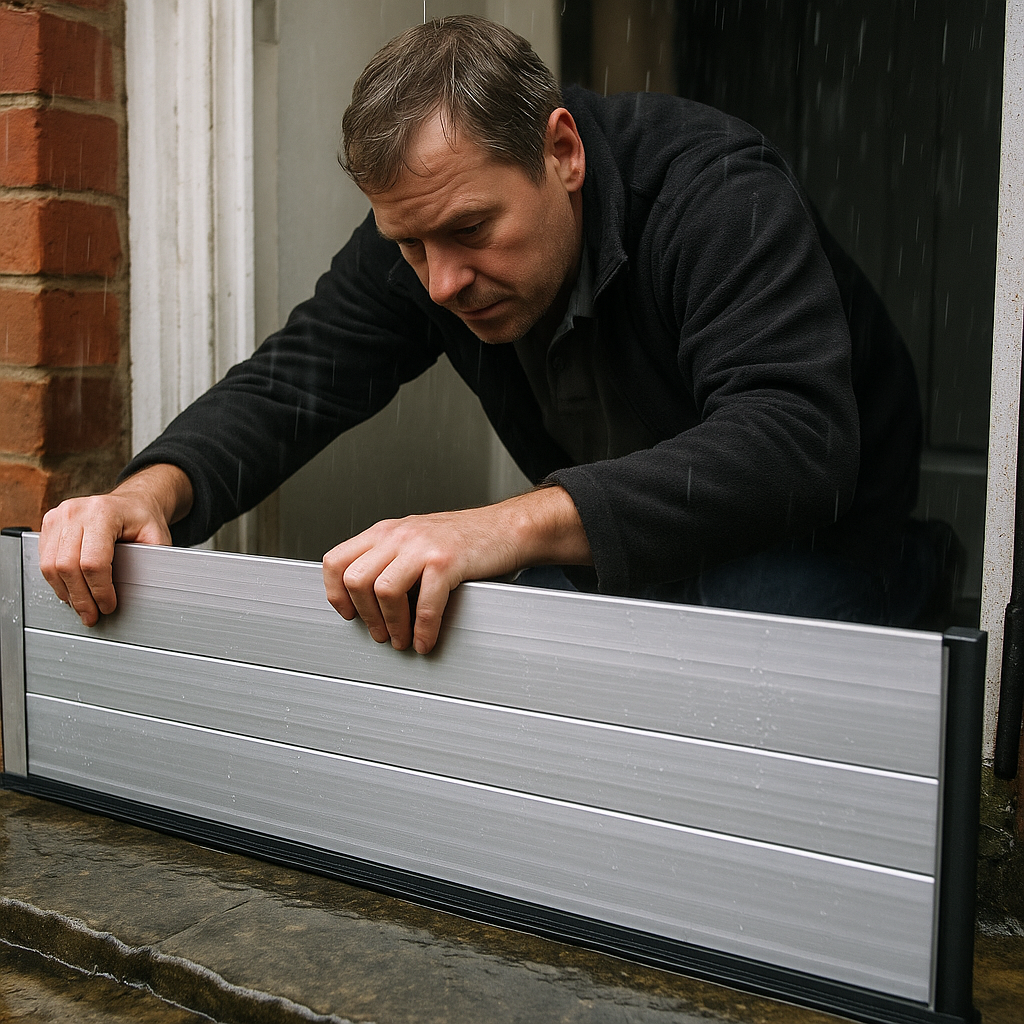
    Homeowner fitting a flood barrier door seal as part of storm preparation UK home 2026

    Flood Barriers: Who Actually Needs One and What to Buy

    Flooding affects around 5.2 million properties in England alone, according to the Environment Agency, but not every homeowner needs to invest in flood barriers. Check whether your property is in a flood risk area using the government’s official flood risk checker before spending money on products you may not need.

    If you are in a risk zone, the most practical first layer of defence is door flood barriers. These fit across external doorframes and are available in aluminium or composite versions from specialist suppliers. Prices range from around £150 for a basic single-door barrier to over £1,000 for a full threshold-level flood door replacement. Air brick covers are also worth fitting; standard air bricks let water flow freely into underfloor voids, and covers rated for temporary flood protection can be fitted in seconds.

    For those in higher-risk zones, a property flood resilience survey may be worth commissioning. These assessments, often part-funded through local council schemes, identify the specific entry points for water and recommend a prioritised list of measures. The National Flood Forum can point you towards accredited surveyors.

    How Property Ownership Changes Your Risk Exposure

    Homeowners carry a different level of storm-related financial risk than renters, and that exposure shifts further depending on whether a property is a primary residence, a buy-to-let, or sits within a portfolio. Investors and landlords sometimes underestimate how quickly storm damage to a rental property can spiral: loss of rental income, emergency accommodation costs for tenants, and repair bills that fall between building and contents insurance policies. Based in Mansfield, Nottinghamshire, Lister Group provides a full suite of property services, including lettings management and buy-to-let services, to homeowners and landlords across the region. Clients at lister-group.co.uk who are investing in property or managing a portfolio are increasingly asking about storm resilience as part of their annual property health checks, which reflects how seriously landlords now take weather-related risk.

    For anyone moving house in autumn or winter, storm preparation takes on extra urgency. New homeowners often do not know the quirks of their property, which gutters block, which chimney stack has never been repointed, or whether the previous owners left a shed anchor bolt loose. Getting a thorough pre-storm check done in the first weeks of ownership can prevent a very expensive introduction to your new home.

    Making a Home Insurance Claim After a Storm: What to Expect

    Most standard UK home insurance policies cover storm damage, but the definition of a storm in insurance terms is not always what you might expect. Insurers typically require wind speeds above a certain threshold, often around 55 mph, and may request confirmation from the Met Office. Keep a note of any named storms or significant weather events, including dates and Met Office reports, as this can support your claim.

    When damage happens, photograph everything before any repairs are attempted. Temporary measures like a tarpaulin over a broken roof section are fine and usually covered as emergency mitigation, but major repairs should wait until a loss adjuster has visited. Contact your insurer on the same day if possible; most have 24-hour storm claim lines, and many now allow claims to be started through apps.

    Excess levels vary widely between policies. A buildings excess of £250 to £500 is common, but some flood-specific excesses run into thousands on properties in higher-risk postcodes. Read your policy schedule carefully and make sure you understand what is excluded, particularly outbuildings, boundary walls, and gates, which are frequently not covered under standard buildings sections.

    The Practical Pre-Storm Checklist for UK Homeowners

    Condense everything into a list you can actually work through before a warning is issued. Check roof tiles and guttering every autumn. Clear gutters of leaves before October ends. Service any sump pump fitted in basements or below-ground extensions. Locate your internal stopcock and make sure it turns freely. Trim back trees and shrubs within striking distance of the house or garage. Store or anchor all garden furniture, tools, and equipment. Check your home insurance policy covers the current rebuild value of your property, not just the purchase price.

    Lister Group, whose property services include mortgages and lettings management alongside broader advice for homeowners across Mansfield and Nottinghamshire, notes that many clients who are moving house or investing in property for the first time underestimate the importance of annual property maintenance cycles. Getting into the habit of a pre-storm check in September or October, every year, is one of those small habits that makes a measurable difference.

    Storm preparation is not glamorous. It is an afternoon on a ladder, a conversation with your insurer, and a decision about where to store the garden chairs. But done properly, it is also the difference between a storm that passes without consequence and one that costs you months of disruption.

  • Energy Bills in Britain: What Ofgem’s 2026 Price Cap Changes Actually Mean for Your Household

    Energy Bills in Britain: What Ofgem’s 2026 Price Cap Changes Actually Mean for Your Household

    If you’ve glanced at your energy bill recently and felt a creeping sense of bafflement, you’re not alone. The Ofgem energy price cap 2026 has been all over the news, but most of the coverage buries the actual numbers under layers of jargon. So here’s a straightforward breakdown of what the cap is, how it works, what it currently means for your annual bill, and why some parts of the country are paying noticeably more than others.

    One quick note before we get into it: energy isn’t the only household cost that’s quietly climbing. Plenty of people are also spending more on routine home maintenance tasks. Things like wheelie bin cleaning have become popular as households try to stay on top of hygiene without racking up extra costs. But energy remains the big one. Let’s dig in.

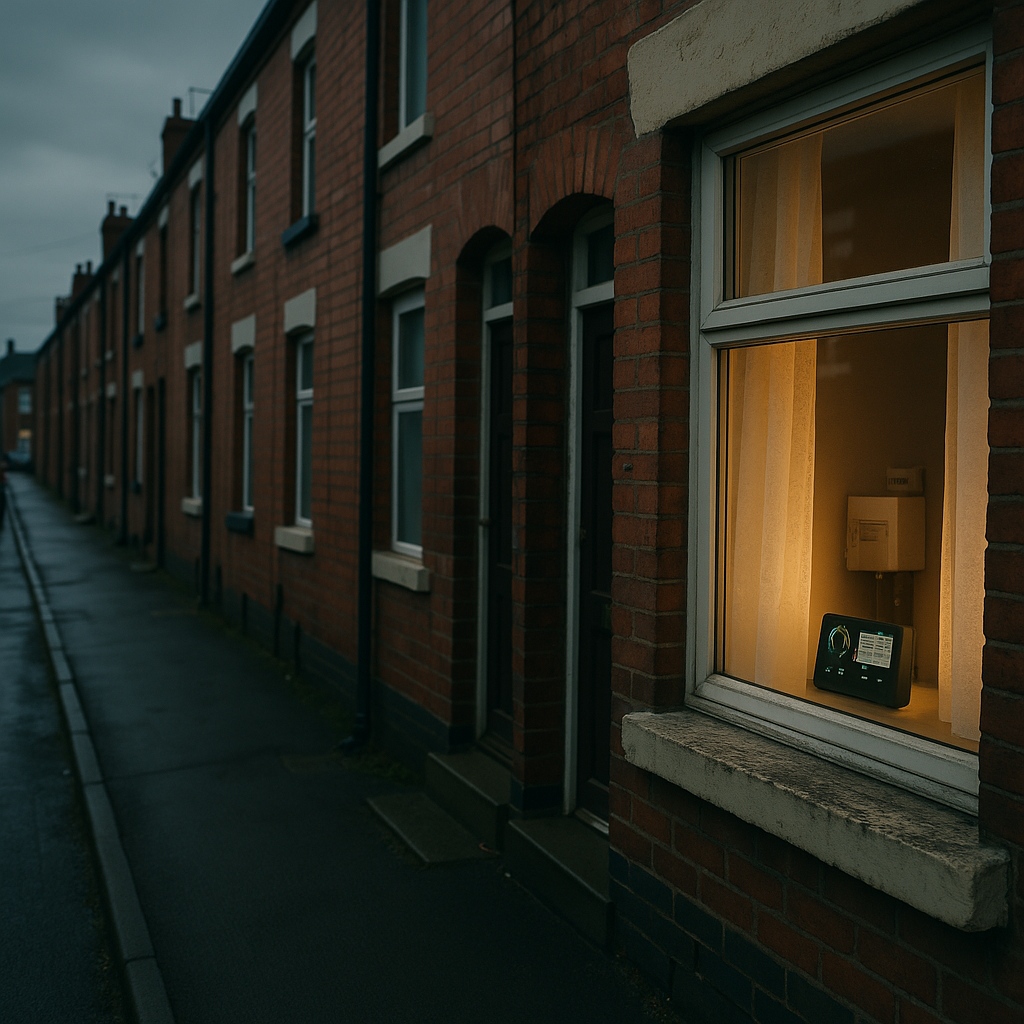
    Terraced houses in northern England representing household energy costs under the Ofgem energy price cap 2026
    Terraced houses in northern England representing household energy costs under the Ofgem energy price cap 2026

    What Is the Ofgem Price Cap and How Does It Actually Work?

    The Ofgem price cap does not cap your total bill. That’s the single most common misunderstanding, and it trips up a huge number of people. What it actually caps is the unit rate you pay per kilowatt hour (kWh) of electricity or gas, plus the daily standing charge. So your final bill still depends on how much energy you use. Use more, pay more.

    Ofgem reviews and resets the cap every quarter. That means January, April, July, and October each bring a potential change. The regulator bases the new figure on wholesale energy market prices, network costs, VAT, and operating costs for suppliers. When wholesale gas prices spike globally, the cap tends to follow upwards. When they ease, there’s usually a lag before consumers see any benefit.

    The figures are expressed as an annual bill for a “typical” household. Ofgem defines that as a property using 2,700 kWh of electricity and 11,500 kWh of gas per year. Most people’s actual usage differs, sometimes significantly, but it gives a consistent yardstick for comparison.

    What Are the Current Cap Figures for 2026?

    For the April to June 2026 quarter, Ofgem set the price cap at £1,849 per year for a typical dual-fuel household on a standard variable tariff. That’s a modest decrease from the £1,938 figure that applied during the first quarter of 2026, reflecting a slight softening in wholesale markets over winter. However, it remains well above pre-crisis norms. Before the energy shock of 2021 and 2022, typical bills sat closer to £1,100 to £1,200 a year.

    Breaking that down further: the capped electricity unit rate for Q2 2026 sits at roughly 24.5p per kWh, with a standing charge of around 61p per day. Gas comes in at approximately 6.4p per kWh, with a daily standing charge of about 31p. Those standing charges alone add up to nearly £340 a year before you’ve used a single unit of energy, which is a figure that catches many people off guard.

    You can check the most up-to-date quarterly figures directly on the Ofgem website, where they also publish the methodology behind each adjustment.

    Household energy bill close-up showing unit rates affected by the Ofgem energy price cap 2026
    Household energy bill close-up showing unit rates affected by the Ofgem energy price cap 2026

    Why Do Bills Vary So Much by Region?

    This is where things get genuinely interesting. The Ofgem energy price cap 2026 is not a single flat number applied identically across Britain. There are fourteen distribution network operator (DNO) regions, and the standing charges in particular differ between them. Network costs vary depending on the age and density of the local grid infrastructure, how far energy needs to travel, and how much investment the local operator has had to make to maintain supply.

    In practice, households in the South West of England and in parts of rural Scotland tend to face higher standing charges than those in London or the East Midlands. The gap can amount to £50 to £100 per year just from the standing charge difference alone, before usage even enters the picture. For households already stretched thin, that regional disparity feels deeply unfair, and it’s prompted ongoing calls for Ofgem to consider a national average standing charge instead of a regionally variable one.

    Northern Ireland operates under a separate regulatory framework and is not covered by Ofgem. The Utility Regulator in Belfast handles price oversight there, and bills have historically tracked slightly differently to the rest of the UK.

    Are Prepayment Meter Customers Still Paying More?

    For most of the post-crisis period, prepayment meter (PPM) customers paid higher rates than those on direct debit. That injustice finally ended in July 2023 when Ofgem mandated parity, and it has held through into 2026. PPM customers now pay the same capped rates as everyone else on a standard variable tariff. That’s a significant improvement for around 7 million households who rely on a key or card meter, many of them in lower-income areas.

    If you’re still unsure which tariff you’re on, your supplier’s app or online account will usually tell you clearly. And if a fixed tariff is available that undercuts the current cap, it’s worth at least running the numbers. Some suppliers have been offering 12-month fixes at rates below the Q2 2026 cap level, which gives a degree of certainty if you expect prices to rise again in the second half of the year.

    Simple Ways to Cut Your Bill Without Losing Comfort

    The price cap is what it is. Ofgem sets it and you can’t negotiate it down. But you can reduce how many units you burn through, which is where the real savings live.

    Draught-proofing doors and windows is one of the highest return-on-investment jobs you can do in a British home, often costing under £50 in materials and saving multiples of that annually. Turning your boiler flow temperature down to around 55 to 60 degrees Celsius (if you have a modern condensing boiler) can cut gas consumption by up to 8%, according to the Energy Saving Trust. A smart meter won’t reduce your bills on its own, but seeing real-time consumption tends to change behaviour. And simple habits like only boiling as much water as you need, showering rather than bathing, and turning radiators off in unused rooms all chip away at that annual figure.

    What Happens Next with the Cap?

    Analysts are cautiously optimistic about the second half of 2026. Wholesale gas prices have eased compared to the peaks of 2022 and 2023, and forecasters at Cornwall Insight have projected the cap could dip slightly further for the July to September quarter, possibly towards the £1,800 mark, though nothing is guaranteed. Global events, from geopolitical tensions to extreme weather affecting LNG supplies, can shift wholesale prices sharply and quickly.

    The longer-term picture involves a gradual shift towards domestic renewable generation, which should eventually reduce Britain’s exposure to volatile global gas markets. But that transition takes years, not months. For now, the Ofgem energy price cap 2026 remains the single most important number for household budgeting across the country, and staying on top of each quarterly change is simply good financial housekeeping.

    Keep an eye on the quarterly announcements, compare fixed tariffs when they appear, and use your smart meter data if you have one. Knowledge, in this case, genuinely does translate to money saved.

    Frequently Asked Questions

    What is the Ofgem energy price cap for 2026?

    For the April to June 2026 quarter, the Ofgem energy price cap is set at £1,849 per year for a typical dual-fuel household using 2,700 kWh of electricity and 11,500 kWh of gas annually. This figure is reviewed every quarter and can go up or down depending on wholesale market prices.

    Does the Ofgem price cap mean I won't pay more than that amount?

    No. The cap limits the unit rates and standing charges your supplier can charge, not your total bill. If you use more energy than the ‘typical’ household Ofgem uses as its benchmark, your bill will be higher than the headline cap figure.

    Why are energy standing charges different in different parts of the UK?

    Standing charges vary by region because they reflect the local distribution network’s costs, including grid maintenance, infrastructure investment, and the distance energy travels to reach homes. Rural areas and regions with older grid infrastructure, such as the South West and parts of Scotland, often face higher daily standing charges.

    Do prepayment meter customers pay more than direct debit customers under the 2026 cap?

    No, since July 2023 Ofgem has required that prepayment meter customers pay the same capped rates as those on direct debit standard variable tariffs. This parity remains in place through 2026, benefiting around 7 million households.

    Is it worth fixing my energy tariff instead of staying on the price cap?

    It depends on the fixed rate being offered and your view on where prices are heading. If a supplier offers a 12-month fix below the current quarterly cap, it can provide useful certainty. Compare deals on Ofgem-accredited comparison sites and check the cap forecast before committing.