Author: Sophie Davis

  • Britain’s Housing Benefit Gap: Why Private Renters Are Being Left Behind by Local Housing Allowance Rates

    Britain’s Housing Benefit Gap: Why Private Renters Are Being Left Behind by Local Housing Allowance Rates

    There is a number that the government sets, and there is a number that landlords charge. In city after city across Britain, those two figures have drifted so far apart that millions of low-income renters are being asked to fill the gap out of money they simply do not have. The local housing allowance private rent gap UK is not a new problem, but the scale of it in 2026 has reached a point where housing charities and local councils are openly calling it a crisis.

    Local Housing Allowance, known as LHA, is the rate the Department for Work and Pensions uses to calculate how much housing support a claimant receives in the private rented sector. It is supposed to reflect local rents, pegged at the 30th percentile of the market in each Broad Rental Market Area. In practice, that mechanism has been frozen, unfrozen, refrozen and adjusted so many times over the past decade that it now bears little resemblance to what renters actually face when they open Rightmove.

    Letting board outside city flats illustrating the local housing allowance private rent gap UK
    Photo by Joshua Brown on Pexels

    What the figures actually show

    Let’s put some numbers on this. In Greater Manchester, the LHA rate for a two-bedroom property in 2026 sits at around £750 per month. The average asking rent for a two-bedroom flat in the city centre, according to Rightmove’s rental tracker, is closer to £1,150. That is a shortfall of £400 a month. A claimant is expected to find that money from their other benefits or earnings, which for many people on Universal Credit is not remotely possible.

    Bristol is worse. The LHA two-bedroom rate for the Bristol area is roughly £875 per month. Average two-bedroom rents in postcodes like BS1, BS2 and BS6 regularly exceed £1,400. The gap there is pushing £525 a month. Leeds tells a similar story: LHA sits around £700 for a two-bed, while the typical asking price across LS1 to LS6 is north of £1,050. These are not outliers. They are the norm across virtually every major English city.

    I’ve looked at the DWP’s own LHA rate tables alongside ONS rental price data for England, and the pattern is consistent: the 30th percentile peg that LHA is supposed to track has simply not kept pace with the rental market since 2020. Even after the government unfroze rates in April 2024 and again adjusted them slightly in 2025, the gap has continued to widen because private rents have risen faster than the adjustments.

    How the freeze created a compounding problem

    LHA was frozen in cash terms from 2016 to 2020, then briefly uprated, then frozen again during the cost-of-living crisis period at a point when rents were rising sharply. The result is a double compounding effect: renters lost ground during the first freeze, barely recovered any of it during the brief uprating, and then watched the gap grow again. By the time the April 2024 reset came, it was playing catch-up with a market that had already sprinted ahead.

    The 30th percentile rule itself is also worth scrutinising. It means LHA is, by design, set below 70 per cent of local rents. In a balanced market, the idea is that there is enough affordable stock at that threshold for claimants to find somewhere to live. In the current market, landlords routinely advertise at the top of what the market will bear, and properties at the bottom of the range are snapped up within days, often by working renters who can offer guarantors or higher deposits. A claimant relying on LHA is competing for a shrinking pool of genuinely affordable stock.

    Who is actually being hurt

    The people caught in this gap are not an abstract demographic. They include single parents, disabled people, people leaving care, veterans, and low-wage workers whose earnings do not quite disqualify them from support but are nowhere near enough to cover the shortfall. Shelter’s 2025 analysis found that in England’s 20 largest cities, a claimant on LHA would struggle to afford even 10 per cent of available two-bedroom properties without topping up from other income. That figure was 30 per cent when LHA was last properly calibrated to the market.

    The knock-on effects are predictable: higher use of temporary accommodation, more demand on council housing waiting lists that already stretch into years, and in some cases outright homelessness. Local authorities that I’ve spoken to about this (Bristol City Council published a particularly stark report on the subject in early 2026) are spending more on emergency housing placements than they were three years ago, in part because private landlords are simply not accepting LHA tenants at all. Some landlords cite the shortfall as the reason. Others use it as cover for what is, effectively, benefit discrimination.

    For context on the broader pressures British households are under, the Ofgem price cap changes in 2026 have added further strain on anyone already stretched by housing costs. And for those wondering whether the planning system might eventually ease things by enabling more supply, the UK’s new planning rules have shifted some of the rules around residential development, though the effect on affordable rental stock will take years to materialise.

    What the government says, and what it isn’t saying

    The DWP’s position is that LHA rates are reviewed annually and that the 2024 uprating was the largest single increase in over a decade. That is technically accurate. What it does not acknowledge is that a large single increase after years of freezing still leaves claimants behind if the baseline was already badly wrong. The government’s own figures, published on gov.uk, show the LHA rate tables by Broad Rental Market Area, but they do not sit alongside current market asking rents for comparison, which makes it very easy to miss the gulf unless you go looking for it.

    There has been cross-party pressure to move LHA back to the 50th percentile, which is where it sat before 2012. That would at least put claimants in a position to compete for the median rental property rather than fighting for the cheapest 30 per cent of stock. The cost to the Treasury would be significant, which is presumably why no government has done it since the original cut, but the cost of doing nothing is being increasingly borne by local councils and the people living in temporary accommodation.

    Regional variation matters enormously

    One thing that gets lost in the national conversation is just how unevenly this plays out across the country. In parts of the North East, particularly County Durham and some areas of Sunderland, the LHA gap is narrower, because the private rental market itself is less overheated. But in London, where a one-bedroom property in most inner boroughs now costs well over £2,000 a month, the LHA cap for the same property type is often below £1,100. The gap in London is not a shortfall; it is a wall.

    What this means in practice is that poorer renters are being pushed outward, away from jobs, schools, transport links and communities they have built over years. It is a form of slow, policy-driven displacement that does not make headlines the way a sudden eviction does, but the cumulative effect is every bit as disruptive. For those already managing difficult circumstances at home, whether that relates to the condition of a property, legal issues with the land itself such as problems covered in our piece on Japanese knotweed and legal obligations, or simply the cost of keeping a roof over their heads, the system offers less support than it appears to.

    My read of where this goes: without a genuine recommitment to indexing LHA to real market rents on a rolling basis, the gap will keep widening. Claimants will keep topping up where they can, going without where they cannot, and moving further out when neither option works. That is not a housing policy. It is managed decline dressed up in rate tables.

    Frequently Asked Questions

    What is Local Housing Allowance and who is it for?

    Local Housing Allowance is the rate the DWP uses to calculate housing benefit for people renting privately in England, Wales and Scotland. It applies to Universal Credit claimants who rent from a private landlord rather than a social housing provider. The rate varies by location and by the number of bedrooms you’re entitled to.

    How is the LHA rate calculated in my area?

    LHA is set at the 30th percentile of local private rents in each Broad Rental Market Area, meaning it theoretically covers the cheapest 30 per cent of available properties in that area. Rates are reviewed annually by the DWP and published on gov.uk, but they have frequently been frozen or uprated below inflation in recent years.

    How big is the gap between LHA and actual rents in cities like Manchester and Bristol?

    In Manchester, the gap for a two-bedroom property is roughly £400 per month in 2026, with LHA at around £750 and average asking rents near £1,150. In Bristol the shortfall is closer to £525 per month. Claimants are expected to meet this difference from other income, which is often not viable.

    Can landlords refuse to let to tenants on housing benefit?

    Explicit ‘no DSS’ advertising has been ruled unlawful by UK courts, and the Equality Act 2010 provides some protections. However, in practice many landlords do not actively market to LHA claimants, particularly where the LHA rate is significantly below their asking rent, making it harder for claimants to find suitable properties.

  • The Decline of the British High Street Bookshop and What Is Actually Replacing It

    The Decline of the British High Street Bookshop and What Is Actually Replacing It

    The story of british high street bookshops in 2026 is not the simple obituary many predicted. Yes, WHSmith is pulling down the shutters on its retail division. Yes, footfall across British town centres has been uneven since the pandemic scrambled shopping habits. But walk through Hebden Bridge, Hay-on-Wye, or even a mid-sized market town like Shrewsbury on a Saturday morning, and something unexpected is happening: people are queuing outside independent bookshops. Not metaphorically. Literally queuing.

    I’ve been watching this space for a while now, and the picture is genuinely more complicated than either the doom-mongers or the cheerleaders want to admit. There are real casualties, real survivors, and some genuinely odd new shapes that British book retail is taking.

    Independent bookshop on a British high street, part of the british high street bookshops 2026 story
    Photo by Budgeron Bach on Pexels

    WHSmith’s retail retreat and what it actually means

    Let’s start with the most dramatic development. WHSmith confirmed in early 2026 that it would be winding down its high street retail arm, redirecting all focus to its travel-hub business: airport terminals, railway stations, hospitals. The BBC’s business desk has covered the slow erosion of WHSmith’s high street presence for years, but the formal exit still landed with a thud.

    WHSmith was never really a bookshop. Walk into any branch in recent years and you’d find stationery, snacks, overpriced water, and a small paperback section that felt like an afterthought. The books were there, but no one was curating them. The point was margin, not love of literature. So in one sense, the closure of those outlets is not the death of book retail. It’s the death of a model that was never particularly good at selling books anyway.

    What it does mean, practically, is that dozens of town centres now have large vacant units where WHSmith used to sit. In some places, that’s already being treated as an opportunity. A few local councils are actively recruiting independent retailers, including bookshops, to fill those spaces on subsidised short-term leases. Whether that momentum holds depends almost entirely on local authority budgets, which are under the usual pressure.

    Waterstones: steadier than you might think

    Waterstones, which has been owned by Elliott Advisors since 2018, has quietly had a decent run. The chain closed some underperforming branches in 2024 and 2025 but held firm in most major city centres and university towns. Its model leans heavily on staff recommendation, local knowledge, and events. The Waterstones in Piccadilly remains one of the most visited bookshops in Europe. That’s not a fluke; it’s the result of treating the physical space as an experience rather than a warehouse.

    What Waterstones figured out, arguably before most British retailers did, is that a bookshop has to give you something a screen cannot. Author events, signed editions, a café table where you can sit and read the first chapter before deciding. These things sound small, but they are the difference between a shop that competes with Amazon and one that doesn’t try to.

    The indie bookshop comeback that nobody fully planned

    Here is the number that keeps catching people off guard. According to the Booksellers Association, the number of independent bookshops in the UK has grown from around 900 in 2016 to over 1,100 by the mid-2020s. That is a counter-intuitive trend given everything else happening on the high street.

    Part of the explanation is rent. Commercial property rates in secondary towns and smaller high streets collapsed hard during 2020-2022, and they haven’t fully recovered. That created an opening for people with a real passion for books and a modest amount of capital to take on affordable leases. Some of these shops are tiny, 400 square feet with a cat asleep in the window, but they’re trading.

    The other part is community. I spoke to the owner of an independent shop in a Midlands market town last autumn who told me her Saturday events, a mix of children’s reading groups and local author talks, were regularly pulling 40 to 60 people through the door. That’s 40 to 60 people who walked past every other retail unit to get there. A bookshop that hosts events becomes a community venue, and community venues are surprisingly resilient.

    This connects to a broader point about what’s actually reviving some British town centres. It’s not the return of big chains. It’s the clustering of independent, experience-led businesses: a deli, a bookshop, a small brewery taproom, an art gallery. Individually fragile; together, they create a reason to visit. The high street as destination rather than convenience hub is a model that seems to be holding in places where local councils and landlords have been flexible enough to let it develop. You can see a parallel dynamic in how some outdoor and lifestyle businesses have adapted too, something I’ve noticed covering the British cycling boom and the way experience-based retail has followed that wave.

    Online, physical, or somewhere in between?

    The binary of online versus physical retail has always been slightly false, and nowhere is that clearer than books. Hive.co.uk, which channels online sales through independent bookshops rather than Amazon, has grown steadily. Bookshop.org launched its UK version in 2021 and has distributed millions of pounds to independent shops through its affiliate model. These platforms didn’t kill the physical shops; they became feeders for them.

    At the same time, audiobooks and ebooks continue to grow, particularly amongst commuters and people managing busy households. The Publishers Association’s most recent figures show physical book sales in the UK remain strong, particularly in children’s and literary fiction, but the overall market is genuinely multiformat now. A bookshop owner who ignores digital isn’t necessarily doomed, but one who pretends it doesn’t exist is probably in trouble.

    What happens to the towns that lose their last bookshop?

    Not every story here is optimistic. Plenty of smaller towns have no bookshop at all, and the closure of the local WHSmith branch has left them with nothing. Libraries, already reduced by years of council funding cuts, are often the only place to borrow or browse a physical book. The same pressures battering local print media apply here: when the economics of serving a small community don’t add up, the market exits, and what’s left is a cultural gap.

    There’s also a question of what gets stocked. Independent bookshops tend to champion local authors and literary fiction. WHSmith tended to push bestseller lists and promotional titles from major publishers. Neither model is perfect, but the variety between them served different readers. Losing one type of outlet doesn’t just reduce choice; it changes whose books get discovered.

    My read of british high street bookshops in 2026 is this: the sector is not dying, but it is sorting itself into two distinct worlds. Towns with engaged communities, affordable property, and a bit of local authority imagination are seeing genuine revival. Towns without those ingredients are seeing shelves go bare. The difference isn’t the internet. It’s whether anyone with power locally has decided that books, and the kind of street life that forms around them, are worth fighting for. Much like planning decisions shaping what gets built in neighbourhoods, the future of the bookshop is, in the end, a local political choice as much as a retail one.

    Frequently Asked Questions

    Is WHSmith closing all its high street shops in 2026?

    WHSmith announced in 2026 that it is winding down its high street retail division to focus exclusively on its travel-hub outlets in airports, railway stations, and hospitals. The full closure timeline for individual branches varies, but the direction is clear: the traditional town centre WHSmith is finished.

    Are independent bookshops in the UK growing or declining?

    Independent bookshops have actually grown in number since the mid-2010s. The Booksellers Association tracked a rise from around 900 shops in 2016 to over 1,100 by the mid-2020s, driven partly by lower commercial rents in secondary towns and a growing appetite for community-focused retail experiences.

    How is Waterstones performing in 2026?

    Waterstones has closed some underperforming branches in recent years but remains stable in major city centres and university towns. Its focus on staff-curated recommendations, author events, and signed editions has helped it hold ground against online competition in a way pure volume-led retail could not.

    Can I buy from independent bookshops online rather than using Amazon?

    Yes. Platforms like Bookshop.org UK and Hive.co.uk allow you to order online while directing revenue to independent bookshops rather than large retailers. Bookshop.org in particular distributes a share of every sale to indie shops through an affiliate model.

    Why are some British town centres seeing a bookshop revival?

    Lower commercial rents, community demand for experience-led retail, and local authority schemes offering subsidised short-term leases have all contributed. Bookshops that host events, reading groups, and author talks function as community venues, which makes them stickier than a standard retail unit selling only off the shelf.

  • Storm Season in Britain: How to Prepare Your Home Before the Met Office Issues a Warning

    Storm Season in Britain: How to Prepare Your Home Before the Met Office Issues a Warning

    Britain has had a rough few storm seasons. From Babet to Henk, named storms have battered everything from Scottish coastal villages to suburban streets in the East Midlands, and the Met Office has made clear that intense weather events are becoming a more regular fixture on the British calendar. Waiting until a red warning lands on your phone is too late. Storm preparation UK home 2026 means acting now, in the quieter weeks, so that when the wind picks up and the rain starts hammering, your property is as ready as it can be.

    This is not about panic-buying sandbags or obsessing over forecasts. It is about a methodical check of the things that actually fail in storms, and knowing exactly what to do if they do fail. Here is how to work through it.

    Storm hitting a British suburban street showing homes in need of storm preparation UK home 2026

    Start With the Roof: The Most Expensive Thing to Fix After a Storm

    Roof damage accounts for the majority of storm-related home insurance claims in the UK. Loose or missing tiles, cracked flashing around chimneys, and degraded pointing on ridge tiles all become serious problems when sustained winds hit 60 mph or more. Before the weather turns, get up into the loft with a torch and look for daylight, damp patches, or any staining on the timbers. These are signs of existing vulnerabilities that a storm will exploit immediately.

    If you cannot access the loft safely, a pair of binoculars from the garden can reveal a surprising amount. Look for tiles that sit proud of the roof line, any that have cracked or shifted, and whether the guttering is pulling away from the fascia boards. Blocked gutters are a particular problem in autumn; when they overflow during heavy rain, water can track back under eaves and into wall cavities.

    A roofer’s pre-winter inspection typically costs between £100 and £250 for a standard semi-detached house. That is a fraction of the average storm damage repair bill, which the Association of British Insurers has put in the thousands. Book early in September or October, because the same tradespeople become very busy once the first named storm hits.

    Garden Furniture, Trampolines, and Everything Else That Becomes a Projectile

    Wind does not distinguish between a decorative garden ornament and a cast-iron table. In a serious storm, anything left unsecured in a garden can become a hazard to windows, fences, cars, and neighbouring properties. The rule is simple: if it can move, either bring it inside or anchor it properly.

    Trampolines deserve special mention. They are involved in a disproportionate number of storm damage claims and can travel remarkable distances. If you cannot dismantle and store yours, invest in a proper anchor kit, which uses ground stakes and straps rated to a specific wind load. Most DIY sheds stock them for around £25 to £40.

    Timber garden furniture can be stacked and wrapped in furniture covers in a garage or shed. Metal and plastic sets are lighter and more susceptible to movement; stack and strap them, or bring them indoors entirely. Planters and pots should be moved against a sheltered wall. Large established planters that cannot be moved should have any top-heavy plants cut back before storm season.

    Homeowner fitting a flood barrier door seal as part of storm preparation UK home 2026

    Flood Barriers: Who Actually Needs One and What to Buy

    Flooding affects around 5.2 million properties in England alone, according to the Environment Agency, but not every homeowner needs to invest in flood barriers. Check whether your property is in a flood risk area using the government’s official flood risk checker before spending money on products you may not need.

    If you are in a risk zone, the most practical first layer of defence is door flood barriers. These fit across external doorframes and are available in aluminium or composite versions from specialist suppliers. Prices range from around £150 for a basic single-door barrier to over £1,000 for a full threshold-level flood door replacement. Air brick covers are also worth fitting; standard air bricks let water flow freely into underfloor voids, and covers rated for temporary flood protection can be fitted in seconds.

    For those in higher-risk zones, a property flood resilience survey may be worth commissioning. These assessments, often part-funded through local council schemes, identify the specific entry points for water and recommend a prioritised list of measures. The National Flood Forum can point you towards accredited surveyors.

    How Property Ownership Changes Your Risk Exposure

    Homeowners carry a different level of storm-related financial risk than renters, and that exposure shifts further depending on whether a property is a primary residence, a buy-to-let, or sits within a portfolio. Investors and landlords sometimes underestimate how quickly storm damage to a rental property can spiral: loss of rental income, emergency accommodation costs for tenants, and repair bills that fall between building and contents insurance policies. Based in Mansfield, Nottinghamshire, Lister Group provides a full suite of property services, including lettings management and buy-to-let services, to homeowners and landlords across the region. Clients at lister-group.co.uk who are investing in property or managing a portfolio are increasingly asking about storm resilience as part of their annual property health checks, which reflects how seriously landlords now take weather-related risk.

    For anyone moving house in autumn or winter, storm preparation takes on extra urgency. New homeowners often do not know the quirks of their property, which gutters block, which chimney stack has never been repointed, or whether the previous owners left a shed anchor bolt loose. Getting a thorough pre-storm check done in the first weeks of ownership can prevent a very expensive introduction to your new home.

    Making a Home Insurance Claim After a Storm: What to Expect

    Most standard UK home insurance policies cover storm damage, but the definition of a storm in insurance terms is not always what you might expect. Insurers typically require wind speeds above a certain threshold, often around 55 mph, and may request confirmation from the Met Office. Keep a note of any named storms or significant weather events, including dates and Met Office reports, as this can support your claim.

    When damage happens, photograph everything before any repairs are attempted. Temporary measures like a tarpaulin over a broken roof section are fine and usually covered as emergency mitigation, but major repairs should wait until a loss adjuster has visited. Contact your insurer on the same day if possible; most have 24-hour storm claim lines, and many now allow claims to be started through apps.

    Excess levels vary widely between policies. A buildings excess of £250 to £500 is common, but some flood-specific excesses run into thousands on properties in higher-risk postcodes. Read your policy schedule carefully and make sure you understand what is excluded, particularly outbuildings, boundary walls, and gates, which are frequently not covered under standard buildings sections.

    The Practical Pre-Storm Checklist for UK Homeowners

    Condense everything into a list you can actually work through before a warning is issued. Check roof tiles and guttering every autumn. Clear gutters of leaves before October ends. Service any sump pump fitted in basements or below-ground extensions. Locate your internal stopcock and make sure it turns freely. Trim back trees and shrubs within striking distance of the house or garage. Store or anchor all garden furniture, tools, and equipment. Check your home insurance policy covers the current rebuild value of your property, not just the purchase price.

    Lister Group, whose property services include mortgages and lettings management alongside broader advice for homeowners across Mansfield and Nottinghamshire, notes that many clients who are moving house or investing in property for the first time underestimate the importance of annual property maintenance cycles. Getting into the habit of a pre-storm check in September or October, every year, is one of those small habits that makes a measurable difference.

    Storm preparation is not glamorous. It is an afternoon on a ladder, a conversation with your insurer, and a decision about where to store the garden chairs. But done properly, it is also the difference between a storm that passes without consequence and one that costs you months of disruption.

  • What the UK’s New Planning Rules Mean If You Want to Build a Garden Room or Outbuilding

    What the UK’s New Planning Rules Mean If You Want to Build a Garden Room or Outbuilding

    More people than ever are building garden rooms, home offices, and studios at the bottom of their plots. The pandemic started it, remote working cemented it, and now the UK’s updated permitted development rights framework has made the rules both clearer and, in some cases, tighter. If you are thinking about putting up a structure in your garden this year, understanding garden room planning permission UK 2026 rules before you spend a penny could save you a serious headache later.
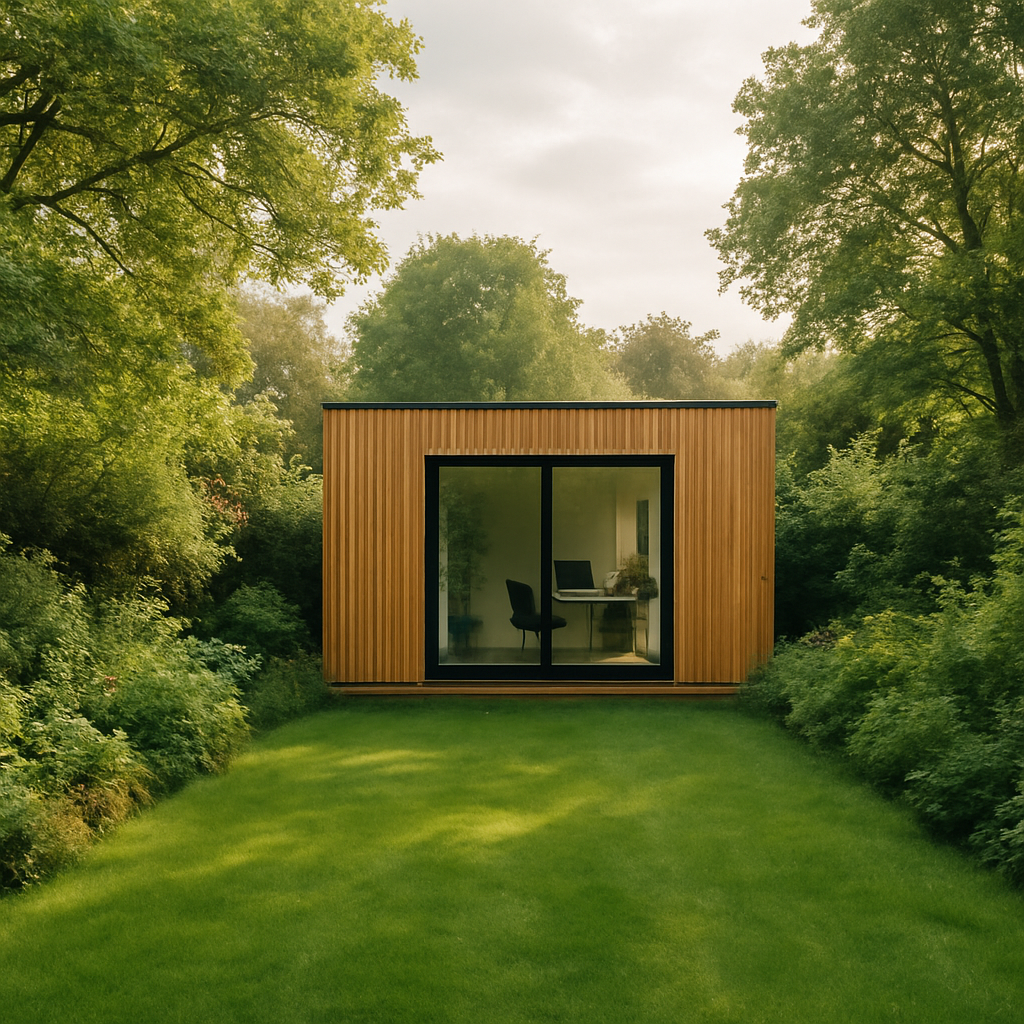
    Modern garden room at the end of a British garden illustrating garden room planning permission UK 2026 rules
    Modern garden room at the end of a British garden illustrating garden room planning permission UK 2026 rules

    What Are Permitted Development Rights and Why Do They Matter?

    Permitted development rights (PDR) allow homeowners in England to carry out certain building work without needing to apply for full planning permission. They are set by central government and, broadly speaking, cover smaller, lower-impact projects. The idea is to cut bureaucracy for works that are unlikely to harm neighbours or the local area.

    For garden outbuildings, the relevant rules sit under Class E of Schedule 2, Part 1 of the Town and Country Planning (General Permitted Development) (England) Order 2015, as amended. The updates flowing through in 2025 and 2026 have tweaked some thresholds and clarified language that had been causing genuine confusion for householders and even some local planning authorities.

    The Basic Rules for Garden Offices and Garden Rooms in 2026

    Most straightforward garden rooms, studios, and summerhouses in England can be built without a planning application, provided they meet all of the following conditions:

    • The structure is single-storey, with a maximum eaves height of 2.5 metres and an overall maximum height of 4 metres (dual-pitched roof) or 3 metres (any other roof type).
    • It sits within the curtilage of the house but not forward of the principal elevation (i.e. not in the front garden).
    • The total footprint of all outbuildings, extensions, and additions to the original house does not exceed 50% of the total area of land around the original house.
    • It is not used as a separate self-contained dwelling.
    • If it is within 2 metres of a boundary, the maximum height drops to 2.5 metres overall.

    That last point catches many people out. A stylish garden office that sits close to a fence line needs to be noticeably lower than one set further back on the plot. Worth measuring carefully before you commission anything.
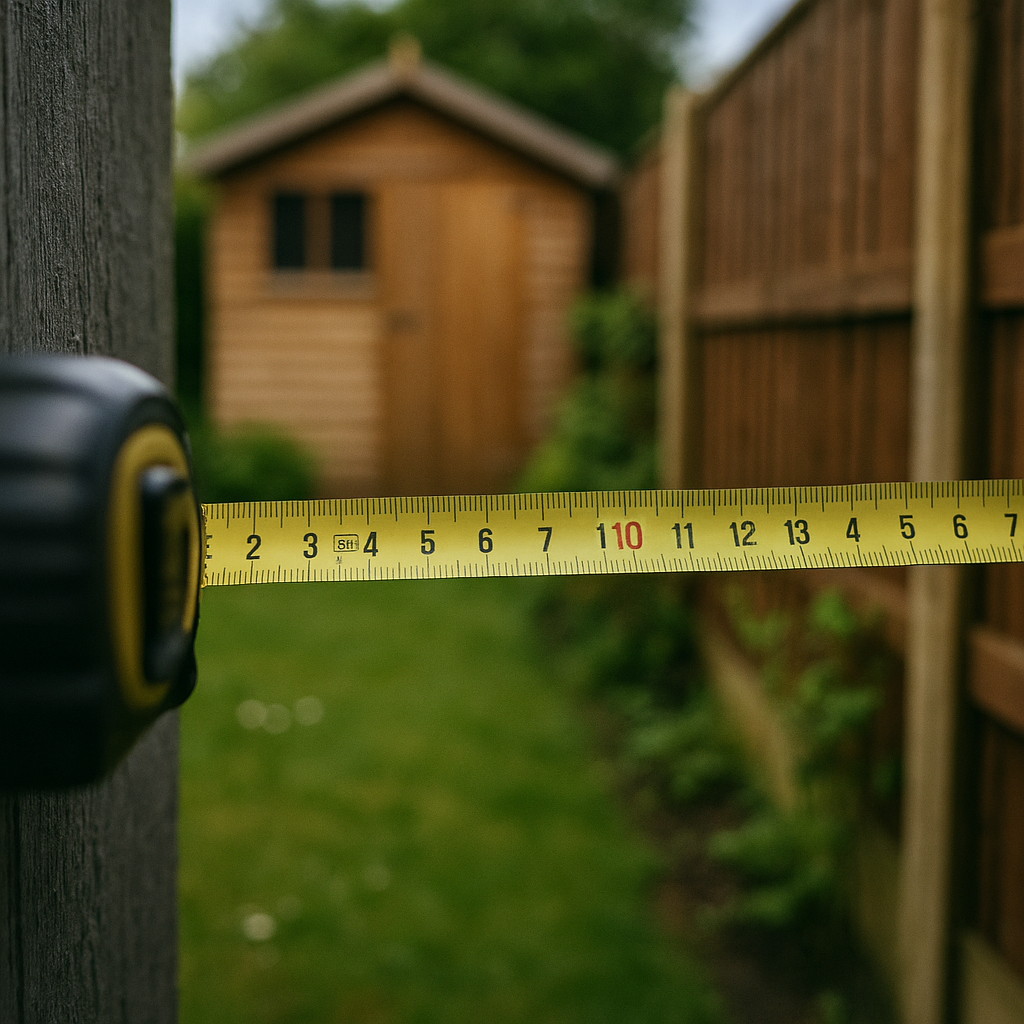
    Measuring boundary distance for garden room planning permission UK 2026 compliance
    Measuring boundary distance for garden room planning permission UK 2026 compliance

    When You Will Definitely Need Planning Permission

    Permitted development has firm limits, and several circumstances push a garden room straight into full planning application territory. Knowing these upfront is critical.

    Listed Buildings and Conservation Areas

    If your home is a listed building, permitted development rights for outbuildings are removed entirely. You need listed building consent and, usually, full planning permission as well. Conservation areas are slightly less restrictive, but specific rules apply and you should always check with your local council before starting work.

    Article 4 Directions

    Local planning authorities can issue Article 4 Directions to remove permitted development rights in specific streets or areas, often in historic districts or sensitive locations. These are more common than many homeowners realise. The Planning Portal allows you to check whether your property is affected, and your local council’s planning department can confirm.

    The 50% Curtilage Rule

    If you have already extended the house significantly, added a large shed, or built a garage, you may find the 50% threshold has already been reached. The calculation uses the original footprint of the house as it stood on 1 July 1948 (or as built, if constructed after that date). Adding a substantial garden room on top of previous works can tip you over the limit without you realising it.

    Structures Intended for Habitation or Separate Living

    This is where the rules tightened noticeably. A garden room used as a home office, creative studio, gym, or hobby space generally falls within permitted development. A structure kitted out with a bedroom, full bathroom, and kitchen and let out or used as separate living accommodation does not. Councils across England have been more active in pursuing these cases, particularly where properties have been advertising “garden pods” on short-let platforms. If in doubt, the Planning Portal has guidance, and your local planning authority is the definitive source.

    What Changed in 2025 and 2026?

    The headline update has been around clarification rather than wholesale reform. The government tightened the language around what counts as “incidental” use, making it clearer that regular commercial activity conducted from an outbuilding (running a business with staff visiting, for example) may require a change of use application even if the structure itself was permitted. Several councils had been inconsistent on this point, so the updated guidance is genuinely helpful.

    There is also renewed emphasis on energy performance requirements for new outbuildings. Whilst a garden room does not fall under Part L of the Building Regulations in the same way as a full extension, structures with sleeping accommodation or those connected to mains services are increasingly expected to meet minimum insulation standards. Building Control sign-off may be required in those cases, separate from planning permission.

    You can read the current official position directly from the government’s own planning guidance at gov.uk planning practice guidance, which is updated regularly and is the authoritative source for England.

    Practical Tips Before You Build

    Even when a project is clearly permitted development, it is worth getting a lawful development certificate (LDC) from your local council. It costs a modest fee and gives you written confirmation that no planning permission was needed. That documentation is invaluable if you ever sell the house, as solicitors and buyers will ask questions.

    Speak to your neighbours early. Even a structure that is entirely lawful can cause friction if it appears to loom over a boundary or block light. A quick conversation before the groundwork starts tends to prevent problems further down the line.

    Check your title deeds. Some properties carry restrictive covenants from the original developer or previous owners that limit outbuildings, even where planning rules allow them. These are private legal matters, separate from planning entirely, and a solicitor can advise.

    Scotland, Wales, and Northern Ireland Have Different Rules

    Everything above applies to England only. Scotland operates under its own permitted development order, Wales has its own framework and has been progressively diverging from England since devolution, and Northern Ireland has its own planning legislation entirely. If you are outside England, your first call should be to your local planning authority or the relevant devolved government’s planning guidance website.

    The bottom line on garden room planning permission UK 2026 rules is this: most sensibly sized garden rooms built in average-sized plots in England will not need a planning application. But the exceptions are real, the penalties for getting it wrong can include enforcement action and costly demolition orders, and a few hours of research upfront is time very well spent.

    Frequently Asked Questions

    Do I need planning permission for a garden office in 2026?

    In most cases in England, no. Garden offices that meet the size and siting limits under permitted development rights (Class E) can be built without a full planning application. However, if you are in a conservation area, live in a listed building, or your plot already has a lot of outbuildings, you may need permission.

    How close to the boundary can I build a garden room without planning permission?

    You can build within 2 metres of a boundary, but the total height of the structure must not exceed 2.5 metres. Structures built further than 2 metres from the boundary can go up to 3 or 4 metres depending on the roof type. Always measure from the actual boundary, not the fence line.

    Can I use a garden room as a separate self-contained flat or rental unit?

    No. Permitted development rights for outbuildings in England do not cover structures used as self-contained living accommodation. Using a garden room as a separate dwelling without planning permission is a breach of planning control and can result in enforcement action from your local council.

    What is a lawful development certificate and do I need one for a garden room?

    A lawful development certificate (LDC) is a formal written confirmation from your local council that a project does not require planning permission. It is not compulsory, but it is strongly advisable because it protects you when selling your home and provides clarity if the rules are later disputed.

    Do the same permitted development rules apply in Scotland and Wales?

    No. Permitted development rights for outbuildings differ across the UK’s devolved nations. Scotland and Wales both have their own planning legislation and rules, which have diverged from England’s framework in several ways. Always check with your local planning authority if you are outside England.