

A few years ago, if you’d mentioned pickleball to most British people, they’d have assumed it was a children’s party game or some kind of novelty pub quiz round. Now I’m hearing about it everywhere. Leisure centres in Swindon are converting spare courts. A tennis club in Surrey has added Wednesday evening pickleball sessions that sell out within hours of going online. A village hall in Shropshire has cleared its weekly furniture to lay down temporary lines. The pickleball UK growing popularity story of 2026 is real, and it’s moving fast.
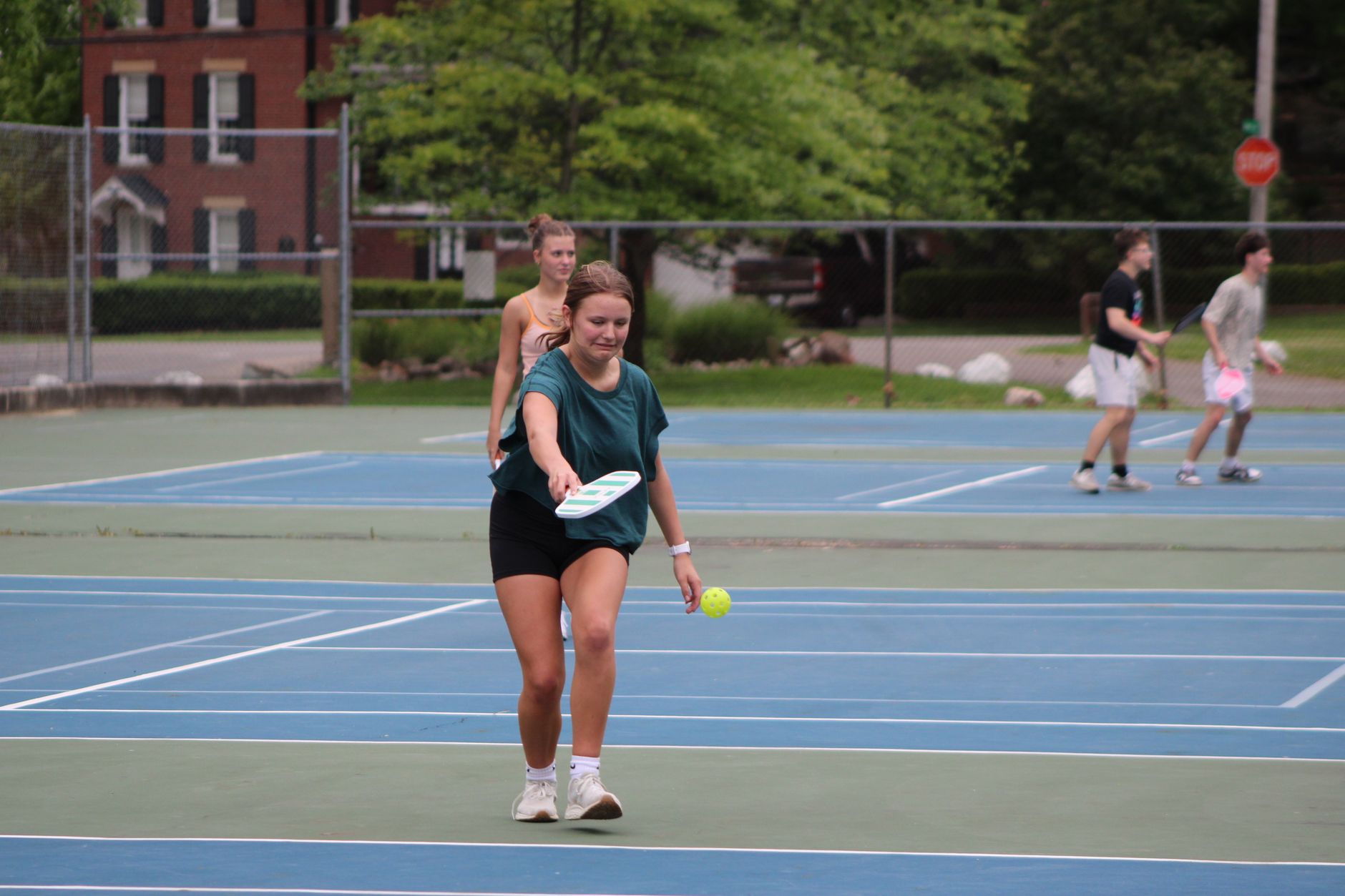
What actually is pickleball, and why does it work so well in Britain?
For the uninitiated: pickleball is played on a court about a quarter of the size of a standard tennis court, with a solid paddle and a perforated plastic ball. Rallies tend to be slower and longer than in tennis, which makes it far more forgiving for players who haven’t been anywhere near a racquet sport since secondary school. The net is slightly lower than a tennis net, and the rules include a “kitchen” zone near the net where you cannot volley. It sounds complicated written down. In practice, most beginners are playing proper points within about fifteen minutes of picking up a paddle.
That low barrier to entry is genuinely the key. Tennis, for all its charms, requires significant coordination and fitness to make a single rally last more than three shots. Pickleball lets two moderately unfit people in their fifties have an enjoyable, competitive game without either of them feeling humiliated. I watched a session at a leisure centre in Bristol in early 2026, and the mix of ages on court was striking: a 28-year-old who played county-level badminton, a retired GP in his late sixties, and two women who described themselves as “completely non-sporty” were all on the same court, all clearly enjoying it.
The numbers behind the UK pickleball surge
Participation data is still patchy, partly because pickleball sits awkwardly between multiple governing bodies, but England Pickleball, the sport’s main national organiser, reported a near-tripling of affiliated clubs between 2023 and early 2026, from around 120 to over 350. The sport has spread particularly fast in England’s commuter belt, the South West, and parts of the East Midlands, though Scotland and Wales are catching up.
Leisure centre operators have noticed. Everyone Active, one of the largest leisure management operators in the country, added pickleball programming across dozens of its sites during 2025. Greenwich Leisure Limited has been similarly active. The appeal for operators is straightforward: a badminton-sized court can host pickleball with minimal modification, sessions fill quickly, and the demographic tends to be older adults who are reliable, consistent bookings rather than occasional visitors.
That older adult demographic is significant. Sport England’s Active Lives survey has consistently shown that getting adults aged 45 and over into regular sport is one of the harder public health challenges in this country. Pickleball appears to be cracking it in a way that padel, despite its own growth, has not quite managed, largely because padel requires a dedicated and expensive enclosed court structure that village halls and existing leisure centres cannot easily provide.
Village halls and tennis clubs: who’s actually running things
A lot of the grassroots growth is happening through informal community networks rather than top-down sports development programmes. The pattern I’ve seen repeated across the country is one enthusiastic person, often someone who encountered the sport on holiday or through a friend in the United States, returning home, buying a starter set of paddles for about £80, booking a village hall or sports hall for two hours, and inviting people along on Facebook. Within six months they have a waiting list.
Tennis clubs are a natural fit, and many have been quicker to adapt than critics expected. The Lawn Tennis Association has formally recognised pickleball as a complementary activity and has produced guidance for member clubs. Some clubs initially resisted, worried that pickleball would cannibalise tennis court time. My reading of the evidence so far is that it hasn’t; if anything, it’s bringing in members who then occasionally try tennis as well. The sports aren’t really competing for the same player at the same moment.
Is the infrastructure keeping up?
Here’s where things get more complicated. The demand for dedicated pickleball courts is growing, and temporary lines on existing surfaces only take you so far. Serious players want permanent lines, proper nets at the right height, and surfaces that aren’t shared with five other activities. That requires investment, and that investment requires funding.
Local authority leisure budgets have been under pressure for years. Many councils have outsourced their leisure facilities entirely, which means investment decisions come down to commercial operators calculating whether the return justifies the spend. In wealthier areas, private pickleball clubs are beginning to appear, similar in model to padel clubs. London has seen at least four open in 2025 and early 2026, mostly in converted warehouse or retail units, charging around £15 to £20 per person per session. That price point is accessible enough to build a regular clientele, but it’s a stretch for households on tighter budgets.
The community angle matters here. If pickleball becomes a sport that only exists in private clubs in prosperous postcodes, it loses the thing that makes it interesting: its genuinely democratic reach. The village hall sessions I mentioned, where a retired GP and a 28-year-old badminton player share a court with two self-described non-sporty women, only happen because the costs are negligible and the entry point is almost zero. Protecting that model as the sport professionalises will require deliberate effort from governing bodies and local authorities alike.
Who plays pickleball in Britain in 2026?
The stereotype is retired Americans, and that’s where the sport did indeed grow first, in Florida retirement communities during the 1960s. The British version of the sport looks quite different. From what I’ve seen at sessions around the country, the typical British pickleball player in 2026 is aged between 45 and 65, lives in a suburban or semi-rural area, may have a background in racquet sports but has drifted away from regular exercise, and is looking for something social as much as something athletic. Women make up a notably high proportion of players compared to other racquet sports, which is a genuine distinction worth paying attention to.
There’s also a growing younger competitive scene. England Pickleball now runs a national ranking system, and regional tournaments are attracting players in their twenties and thirties who are treating the sport seriously. The gap between the casual community player and the competitive player is already widening. That’s what happens when a sport grows quickly, and it’s not inherently a problem, but it does mean the sport needs to manage two quite different communities with two quite different needs.
For context on how sports participation trends play out at grassroots level in Britain, it’s worth reading about the funding pressures facing amateur athletics, where a similar story of interest outpacing infrastructure is playing out. The volunteer dependency problem that affects community events is also relevant here: a lot of pickleball’s growth is currently being carried by a small number of enthusiastic individuals who are running sessions, sourcing equipment, and doing the administrative work for nothing.
Whether pickleball becomes a permanent fixture in British sporting life or a ten-year trend that fades once the novelty wears off probably depends less on the sport itself and more on whether the community structures around it can be sustained. The sport is good. The infrastructure question is the one that actually matters.
Frequently Asked Questions
Where can I play pickleball in the UK?
Your best starting point is the England Pickleball website, which has a club finder covering affiliated venues across the country. Many local leisure centres and tennis clubs also run sessions, and community Facebook groups are often the quickest way to find an informal game near you.
Is pickleball easy to learn for beginners?
Yes, most people can play a basic rally within fifteen minutes of their first session. The court is smaller than tennis, the ball moves more slowly, and the rules around the kitchen zone become intuitive quickly. It’s one of the genuinely accessible racquet sports for adults returning to exercise after a long break.
How much does it cost to start playing pickleball in the UK?
A basic paddle costs between £20 and £50, and many community sessions lend equipment for free to newcomers. Court hire at leisure centres typically runs between £8 and £15 per person per session. Private pickleball clubs in cities charge closer to £15 to £20 per session.
Is pickleball the same as padel?
No, they are separate sports. Padel is played in an enclosed glass court with walls in play, uses a depressurised tennis ball, and requires a purpose-built structure. Pickleball uses a smaller open court, a perforated plastic ball, and solid paddles, and can be set up on any suitable hard surface with temporary or permanent lines.
Leave a Reply