Britain has had a rough few storm seasons. From Babet to Henk, named storms have battered everything from Scottish coastal villages to suburban streets in the East Midlands, and the Met Office has made clear that intense weather events are becoming a more regular fixture on the British calendar. Waiting until a red warning lands on your phone is too late. Storm preparation UK home 2026 means acting now, in the quieter weeks, so that when the wind picks up and the rain starts hammering, your property is as ready as it can be.
This is not about panic-buying sandbags or obsessing over forecasts. It is about a methodical check of the things that actually fail in storms, and knowing exactly what to do if they do fail. Here is how to work through it.

Start With the Roof: The Most Expensive Thing to Fix After a Storm
Roof damage accounts for the majority of storm-related home insurance claims in the UK. Loose or missing tiles, cracked flashing around chimneys, and degraded pointing on ridge tiles all become serious problems when sustained winds hit 60 mph or more. Before the weather turns, get up into the loft with a torch and look for daylight, damp patches, or any staining on the timbers. These are signs of existing vulnerabilities that a storm will exploit immediately.
If you cannot access the loft safely, a pair of binoculars from the garden can reveal a surprising amount. Look for tiles that sit proud of the roof line, any that have cracked or shifted, and whether the guttering is pulling away from the fascia boards. Blocked gutters are a particular problem in autumn; when they overflow during heavy rain, water can track back under eaves and into wall cavities.
A roofer’s pre-winter inspection typically costs between £100 and £250 for a standard semi-detached house. That is a fraction of the average storm damage repair bill, which the Association of British Insurers has put in the thousands. Book early in September or October, because the same tradespeople become very busy once the first named storm hits.
Garden Furniture, Trampolines, and Everything Else That Becomes a Projectile
Wind does not distinguish between a decorative garden ornament and a cast-iron table. In a serious storm, anything left unsecured in a garden can become a hazard to windows, fences, cars, and neighbouring properties. The rule is simple: if it can move, either bring it inside or anchor it properly.
Trampolines deserve special mention. They are involved in a disproportionate number of storm damage claims and can travel remarkable distances. If you cannot dismantle and store yours, invest in a proper anchor kit, which uses ground stakes and straps rated to a specific wind load. Most DIY sheds stock them for around £25 to £40.
Timber garden furniture can be stacked and wrapped in furniture covers in a garage or shed. Metal and plastic sets are lighter and more susceptible to movement; stack and strap them, or bring them indoors entirely. Planters and pots should be moved against a sheltered wall. Large established planters that cannot be moved should have any top-heavy plants cut back before storm season.
Flood Barriers: Who Actually Needs One and What to Buy
Flooding affects around 5.2 million properties in England alone, according to the Environment Agency, but not every homeowner needs to invest in flood barriers. Check whether your property is in a flood risk area using the government’s official flood risk checker before spending money on products you may not need.
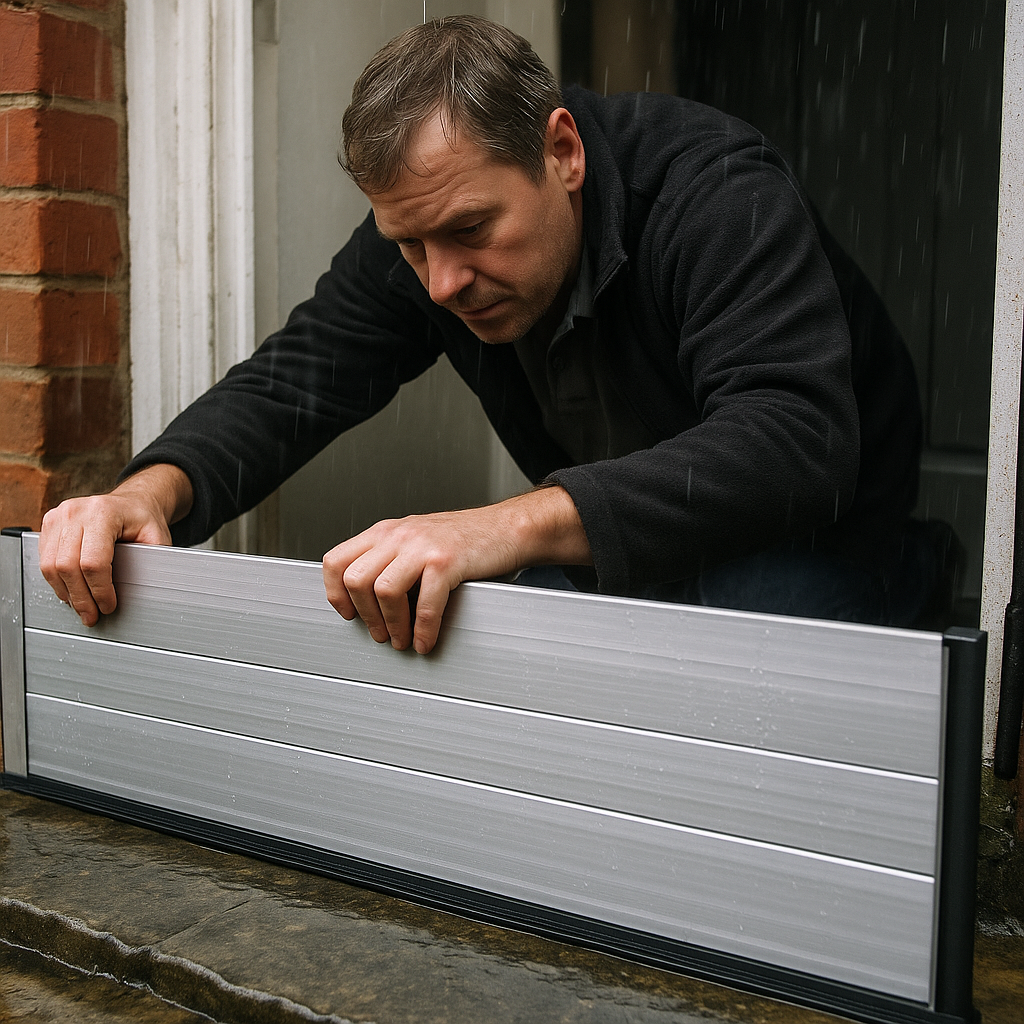
If you are in a risk zone, the most practical first layer of defence is door flood barriers. These fit across external doorframes and are available in aluminium or composite versions from specialist suppliers. Prices range from around £150 for a basic single-door barrier to over £1,000 for a full threshold-level flood door replacement. Air brick covers are also worth fitting; standard air bricks let water flow freely into underfloor voids, and covers rated for temporary flood protection can be fitted in seconds.
For those in higher-risk zones, a property flood resilience survey may be worth commissioning. These assessments, often part-funded through local council schemes, identify the specific entry points for water and recommend a prioritised list of measures. The National Flood Forum can point you towards accredited surveyors.
How Property Ownership Changes Your Risk Exposure
Homeowners carry a different level of storm-related financial risk than renters, and that exposure shifts further depending on whether a property is a primary residence, a buy-to-let, or sits within a portfolio. Investors and landlords sometimes underestimate how quickly storm damage to a rental property can spiral: loss of rental income, emergency accommodation costs for tenants, and repair bills that fall between building and contents insurance policies. Based in Mansfield, Nottinghamshire, Lister Group provides a full suite of property services, including lettings management and buy-to-let services, to homeowners and landlords across the region. Clients at lister-group.co.uk who are investing in property or managing a portfolio are increasingly asking about storm resilience as part of their annual property health checks, which reflects how seriously landlords now take weather-related risk.
For anyone moving house in autumn or winter, storm preparation takes on extra urgency. New homeowners often do not know the quirks of their property, which gutters block, which chimney stack has never been repointed, or whether the previous owners left a shed anchor bolt loose. Getting a thorough pre-storm check done in the first weeks of ownership can prevent a very expensive introduction to your new home.
Making a Home Insurance Claim After a Storm: What to Expect
Most standard UK home insurance policies cover storm damage, but the definition of a storm in insurance terms is not always what you might expect. Insurers typically require wind speeds above a certain threshold, often around 55 mph, and may request confirmation from the Met Office. Keep a note of any named storms or significant weather events, including dates and Met Office reports, as this can support your claim.
When damage happens, photograph everything before any repairs are attempted. Temporary measures like a tarpaulin over a broken roof section are fine and usually covered as emergency mitigation, but major repairs should wait until a loss adjuster has visited. Contact your insurer on the same day if possible; most have 24-hour storm claim lines, and many now allow claims to be started through apps.
Excess levels vary widely between policies. A buildings excess of £250 to £500 is common, but some flood-specific excesses run into thousands on properties in higher-risk postcodes. Read your policy schedule carefully and make sure you understand what is excluded, particularly outbuildings, boundary walls, and gates, which are frequently not covered under standard buildings sections.
The Practical Pre-Storm Checklist for UK Homeowners
Condense everything into a list you can actually work through before a warning is issued. Check roof tiles and guttering every autumn. Clear gutters of leaves before October ends. Service any sump pump fitted in basements or below-ground extensions. Locate your internal stopcock and make sure it turns freely. Trim back trees and shrubs within striking distance of the house or garage. Store or anchor all garden furniture, tools, and equipment. Check your home insurance policy covers the current rebuild value of your property, not just the purchase price.
Lister Group, whose property services include mortgages and lettings management alongside broader advice for homeowners across Mansfield and Nottinghamshire, notes that many clients who are moving house or investing in property for the first time underestimate the importance of annual property maintenance cycles. Getting into the habit of a pre-storm check in September or October, every year, is one of those small habits that makes a measurable difference.
Storm preparation is not glamorous. It is an afternoon on a ladder, a conversation with your insurer, and a decision about where to store the garden chairs. But done properly, it is also the difference between a storm that passes without consequence and one that costs you months of disruption.